
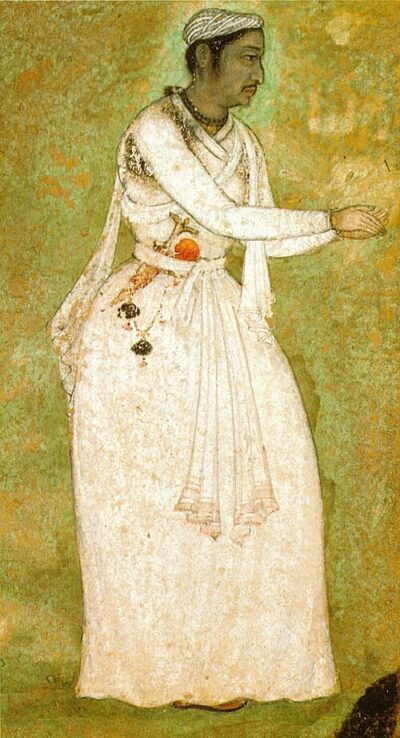
Tansen
Tansen was the 16th-century Hindustani classical musician and composer. Born 1493, in Gwalior. Died April 26, 1589, in Agra.
Facts
7 facts · 2 confirmed by two sources · 0 cited · 5 from one source
Where this comes from
Papalocal keeps its own record. It started from these sources; what each one said is kept here as it was copied, so a change on their side never changes this page by itself. Tap one to read its version.
What Wikidata says · copied November 16, 2026 · revision 2521276999
- Described as
- 16th-century Hindustani classical musician and composer
- Other names
- Tan Sen, Ramutan, Mian Tansen, Miyan Tansen
- Born
- 1493
- Died
- April 26, 1589
- Born in
- Gwalior
- Died in
- Agra
- Occupation
- composer
- Genre
- Hindustani classical music
- Religion
- Islam
- Wikipedias with a page
- 29
Wikidata item Q469894 (wikidata.org/wiki/Q469894), public domain (CC0). Copied November 16, 2026.
What Wikipedia says · copied November 16, 2026 · revision 1378470324
Rāmtanu Gaud Panday (c. 1493 – 26 April 1589), popularly referred by his stage name as Mian Tānsen (lit. 'the Learned One'), or Sangeet Samrāt (lit. 'Monarch of Hindustani Music'), was a Hindustani classical musician. Born into a Hindu Gaur Brahmin family in Gwalior, he learnt and perfected his art in the northwest region of modern Madhya Pradesh. He got his first break as musician and composer in the court of Raja Man Singh Tomar of Gwalior and spent most of his adult life in the court and patronage of the Hindu king of Rewa, Raja Ramchandra Singh Baghel (r. 1555–1592), where Tānsen's musical abilities and studies gained widespread fame. This reputation brought him to the attention of the Mughal Emperor Akbar. In 1562, at about the age of 60, Tānsen joined Akbar's court, and his performances became the subject of many court historians.
Numerous legends have been written about Tānsen, mixing facts and fiction, and the historicity of these stories is doubtful. Akbar considered him one of the Navaratnas Nine Ministers (the nine jewels) and gave him the title Mian, an honorific, meaning learned man.Tansen was a great composer musician and vocalist, to whom many compositions have been attributed in the northern regions of the Indian subcontinent. He was also an instrumentalist who popularized and improved musical instruments. He is among the most influential personalities in the North Indian tradition of Indian classical music, called Hindustani. His 16th-century studies in music and compositions inspired many, and he is considered by numerous North Indian gharana (regional music schools) to be their lineage founder.
Tānsen is remembered for his epic Dhrupad compositions, creating several new rāgs, as well as for writing two classic books on music, Sri Ganesh Stotra and Sangita Sara.
- Born, in its opening lines
- c. 1493
- Died, in its opening lines
- April 26, 1589
From the Wikipedia article “Tansen” (en.wikipedia.org/wiki/Tansen), by its contributors, under CC BY-SA 4.0 (creativecommons.org/licenses/by-sa/4.0/). Copied November 16, 2026; not changed.
Confirmed Two sources agree. Cited One source, and it names where it got it. One source One source, without a reference of its own. Sources disagree The sources disagree. We show the best-supported value and keep theirs below.
