
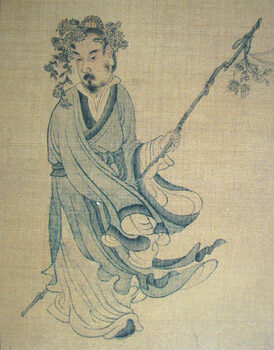
Tao Yuanming
Tao Yuanming was a Chinese poet. Born February 11, 365, in Lushan City. Died November 21, 427.
Facts
9 facts · 2 confirmed by two sources · 5 cited · 2 from one source
Where this comes from
Papalocal keeps its own record. It started from these sources; what each one said is kept here as it was copied, so a change on their side never changes this page by itself. Tap one to read its version.
What Wikidata says · copied November 16, 2026 · revision 2558253161
- Described as
- Chinese poet (365–427)
- Other names
- Yuanming, T'ao Ch'ien, Tao Qian, Tao Yuan Ming, Yuanliang, Tao ling, Tao qian, Jingjie, T'ao2 Yüan1-ming2, Tao Jüan-ming
- Born
- February 11, 365 · 1 reference
- Died
- November 21, 427 · 1 reference
- Born in
- Lushan City
- Citizen of
- Eastern Jin dynasty · 1 reference
- Occupation
- poet · 1 reference; writer
- Spouse
- Zhai Shi · 1 reference
- Father
- Tao Yi · 1 reference
- Mother
- Meng Shi · 1 reference
- Wikipedias with a page
- 47
Wikidata item Q314210 (wikidata.org/wiki/Q314210), public domain (CC0). Copied November 16, 2026.
What Wikipedia says · copied November 16, 2026 · revision 1372383559
Tao Yuanming (陶淵明; 365–427), also known as Tao Qian (陶潜), courtesy name Yuanliang (元亮), was a Chinese poet and politician. He was one of the best-known poets who lived during the Six Dynasties period. Tao Yuanming spent much of his life in reclusion, living in the countryside, farming, reading, drinking wine, receiving the occasional guest, and writing poems in which he reflected on the pleasures and difficulties of life and his decision to withdraw from civil service.
Tao's simple and direct style was somewhat at odds with the norms for literary writing in his time. From the Tang dynasty onward, he was closely associated with the practice of farming as a recluse. During the Northern Song dynasty, influential literati figures such as Su Shi declared him a paragon of authenticity and spontaneity in poetry, predicting that he would achieve lasting literary fame. But Tao's inclusion in the 6th-century literary anthology Wen Xuan implies he began to gain fame in his own era, at least in his birth area. Tao is now regarded as the foremost representative of Fields and Gardens poetry. He is also known for owning and appreciating an unstrung guqin, claiming that he did not need to bother with the sounds of the strings to value the instrument; this became a common literary reference, and also appears in later depictions of Tao such as his portrait by Chen Hongshou. Tao is also depicted in Jin Guliang's Wu Shuang Pu.
- Born, in its opening lines
- 365
- Died, in its opening lines
- 427
From the Wikipedia article “Tao Yuanming” (en.wikipedia.org/wiki/Tao_Yuanming), by its contributors, under CC BY-SA 4.0 (creativecommons.org/licenses/by-sa/4.0/). Copied November 16, 2026; not changed.
Confirmed Two sources agree. Cited One source, and it names where it got it. One source One source, without a reference of its own. Sources disagree The sources disagree. We show the best-supported value and keep theirs below.
