
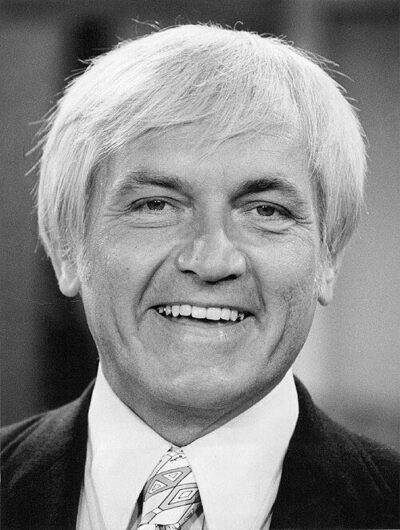
Ted Knight
Ted Knight was an American actor. Born December 7, 1923, in Terryville. Died August 26, 1986, in Glendale. Awards include Purple Heart, Primetime Emmy Award for Outstanding Supporting Actor in a Comedy Series (2 times) and star on Hollywood Walk of Fame.
Facts
14 facts · 2 confirmed by two sources · 1 cited · 11 from one source
Where this comes from
Papalocal keeps its own record. It started from these sources; what each one said is kept here as it was copied, so a change on their side never changes this page by itself. Tap one to read its version.
What Wikidata says · copied November 16, 2026 · revision 2541590213
- Described as
- American actor (1923-1986)
- Other names
- Tadeusz Wladyslaw Konopka
- Born
- December 7, 1923 · 4 references
- Died
- August 26, 1986 · 4 references
- Born in
- Terryville
- Died in
- Glendale
- Buried in
- Forest Lawn Memorial Park
- Cause of death
- colorectal cancer
- Citizen of
- United States
- Occupation
- actor · 1 reference; television actor; voice actor
- Awards
- Purple Heart; Primetime Emmy Award for Outstanding Supporting Actor in a Comedy Series (2 times) (1973, 1976); star on Hollywood Walk of Fame · 1 reference
- Military branch
- United States Army
- Wikipedias with a page
- 21
Wikidata item Q1277943 (wikidata.org/wiki/Q1277943), public domain (CC0). Copied November 16, 2026.
What Wikipedia says · copied November 16, 2026 · revision 1385152753
Ted Knight (born Tadeusz Wladyslaw Konopka; December 7, 1923 – August 26, 1986) was an American actor known for playing the comic roles of Ted Baxter in The Mary Tyler Moore Show, Henry Rush in Too Close for Comfort, and Judge Elihu Smails in Caddyshack.
- Born, in its opening lines
- December 7, 1923
- Died, in its opening lines
- August 26, 1986
From the Wikipedia article “Ted Knight” (en.wikipedia.org/wiki/Ted_Knight), by its contributors, under CC BY-SA 4.0 (creativecommons.org/licenses/by-sa/4.0/). Copied November 16, 2026; not changed.
Confirmed Two sources agree. Cited One source, and it names where it got it. One source One source, without a reference of its own. Sources disagree The sources disagree. We show the best-supported value and keep theirs below.
