
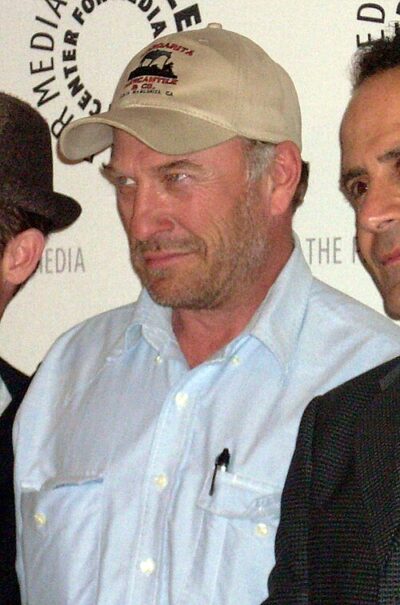
Ted Levine
Ted Levine is an American actor. Born May 29, 1957, in Bellaire. Educated at University of Chicago and Marlboro College.
Facts
13 facts · 1 confirmed by two sources · 1 cited · 11 from one source
Where this comes from
Papalocal keeps its own record. It started from these sources; what each one said is kept here as it was copied, so a change on their side never changes this page by itself. Tap one to read its version.
What Wikidata says · copied November 14, 2026 · revision 2548347603
- Described as
- American actor (born 1957)
- Other names
- Frank Theodore Levine
- Born
- May 29, 1957 · 2 references
- Born in
- Bellaire
- Name at birth
- Frank Theodore Levine
- Citizen of
- United States
- Occupation
- actor · 1 reference; character actor; television actor; film actor; screenwriter · 1 reference
- Education
- University of Chicago; Marlboro College (1975–); Oak Park and River Forest High School · 1 reference
- Nickname
- Ted
- Wikipedias with a page
- 39
Wikidata item Q433520 (wikidata.org/wiki/Q433520), public domain (CC0). Copied November 14, 2026.
What Wikipedia says · copied November 14, 2026 · revision 1378370571
Frank Theodore Levine (born May 29, 1957) is an American actor. He is best known for his role as Jame Gumb, the serial killer "Buffalo Bill" in the film The Silence of the Lambs (1991). He was in the main cast of the television series Monk (2002–2009) as Leland Stottlemeyer.
Levine's other notable roles are in the films Nowhere to Run (1993), Heat (1995), Bullet (1996), The Fast and the Furious (2001), The Manchurian Candidate (2004), Memoirs of a Geisha (2005), American Gangster (2007), Shutter Island (2010), Jurassic World: Fallen Kingdom (2018), and The Report (2019).
- Born, in its opening lines
- May 29, 1957
From the Wikipedia article “Ted Levine” (en.wikipedia.org/wiki/Ted_Levine), by its contributors, under CC BY-SA 4.0 (creativecommons.org/licenses/by-sa/4.0/). Copied November 14, 2026; not changed.
Confirmed Two sources agree. Cited One source, and it names where it got it. One source One source, without a reference of its own. Sources disagree The sources disagree. We show the best-supported value and keep theirs below.
