
Teia
Teia was a king of the Ostrogoths. Born 6th century. Died October 30, 552, in Nuceria. Positions held include Monarch of Italy (552) and King of the Ostrogoths (551–552).
Facts
8 facts · 0 confirmed by two sources · 2 cited · 6 from one source
Where this comes from
Papalocal keeps its own record. It started from these sources; what each one said is kept here as it was copied, so a change on their side never changes this page by itself. Tap one to read its version.
What Wikidata says · copied November 16, 2026 · revision 2514597082
- Described as
- king of the Ostrogoths
- Other names
- Teias
- Born
- 6th century
- Died
- October 30, 552 · 1 reference
- Died in
- Nuceria
- Cause of death
- death in battle
- Citizen of
- Ostrogothic Kingdom
- Positions held
- Monarch of Italy (552); King of the Ostrogoths (551–552) · 1 reference
- Siblings
- Aligern
- Wikipedias with a page
- 34
Wikidata item Q310031 (wikidata.org/wiki/Q310031), public domain (CC0). Copied November 16, 2026.
What Wikipedia says · copied November 16, 2026 · revision 1378220067
Teia (died 552), also known as Teja, Theia, Thila, Thela, and Teias, was the last king of the Ostrogoths (Goths).
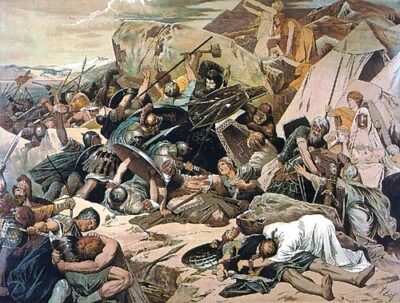
Teia served as the second-in-command under the King Totila during the Gothic resurgence in the Gothic War (535–554) against the Byzantine Empire. Following Totila's death at the Battle of Taginae in July 552, Teia withdrew to Ticinum (modern-day Pavia), the capital of the Gothic Kingdom, where the remaining Goths proclaimed him king. He reorganized the Gothic forces and sought an alliance with the Franks against the Byzantines, but they declined to act. Upon the news that Narses was besieging Cumae, where Teia's brother was a garrison leader and much of Totila's war chest was located, Teia marched to relieve the city. In late summer 552, Teia's army, before reaching Cumae, was intercepted by the Byzantines at the slopes of Mount Vesuvius, where, after a two-month stalemate, he was killed during the battle on the slopes of Mount Lactarius in October 552. The death of Teia marked the end of the Ostrogothic kingdom since no other succeeded him.
From the Wikipedia article “Teia” (en.wikipedia.org/wiki/Teia), by its contributors, under CC BY-SA 4.0 (creativecommons.org/licenses/by-sa/4.0/). Copied November 16, 2026; not changed.
Confirmed Two sources agree. Cited One source, and it names where it got it. One source One source, without a reference of its own. Sources disagree The sources disagree. We show the best-supported value and keep theirs below.
