
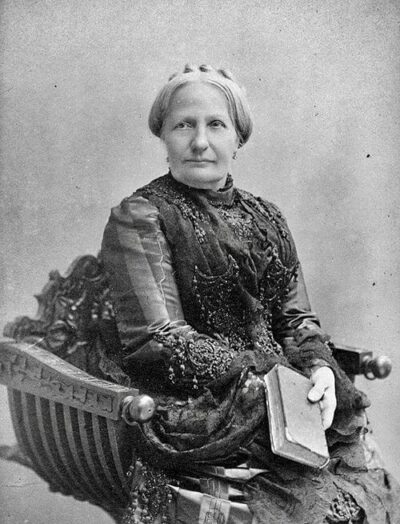
Teresa Cristina of the Two Sicilies
Teresa Cristina of the Two Sicilies was a Princess of the Kingdom of the Two Sicilies and Empress of the Empire of Brazil. Born March 14, 1822, in Naples. Died December 28, 1889, in Porto. Positions held include Consort of Brazil.
Facts
31 facts · 2 confirmed by two sources · 0 cited · 29 from one source
Where this comes from
Papalocal keeps its own record. It started from these sources; what each one said is kept here as it was copied, so a change on their side never changes this page by itself. Tap one to read its version.
What Wikidata says · copied November 16, 2026 · revision 2540272972
- Described as
- Princess of the Kingdom of the Two Sicilies and Empress of the Empire of Brazil (1822-1889)
- Born
- March 14, 1822 · 2 references
- Died
- December 28, 1889 · 2 references
- Born in
- Naples
- Died in
- Porto
- Buried in
- Cathedral of Petrópolis
- Cause of death
- heart failure
- Name at birth
- Teresa Cristina Maria Josefa Gaspar Baltasar Melchior Januária Rosalía Lúcia Francisca de Assis Isabel Francisca de Pádua Donata Bonosa Andréia de Avelino Rita Liutgarda Gertrude Venância Tadea Spiridione Roca Matilde de Bourbon-Duas Sicílias
- Citizen of
- Kingdom of Italy (1861–); Empire of Brazil; Kingdom of Portugal
- Occupation
- art collector
- Positions held
- Consort of Brazil
- Instrument
- voice
- Spouse
- Pedro II of Brazil (1843–) · 2 references
- Children
- Afonso, Prince Imperial of Brazil; Isabel, Princess Imperial of Brazil; Princess Leopoldina of Brazil; Pedro, Prince Imperial of Brazil
- Father
- Francis I of the Two Sicilies
- Mother
- Maria Isabella of Spain
- Siblings
- Princess Maria Amalia of the Two Sicilies; Princess Maria Carolina of the Two Sicilies; Princess Maria Carolina, Duchess of Berry; Princess Maria Antonia of the Two Sicilies; Princess Luisa Carlotta of the Two Sicilies; Prince Carlo Ferdinando, Prince of Capua; Leopold of the Two Sicilies, Count of Syracuse; Prince Louis, Count of Aquila; Ferdinand II of the Two Sicilies; Prince Francis, Count of Trapani
- Religion
- Catholicism
- Wikipedias with a page
- 38
Wikidata item Q209353 (wikidata.org/wiki/Q209353), public domain (CC0). Copied November 16, 2026.
What Wikipedia says · copied November 16, 2026 · revision 1372083321
Dona Teresa Cristina (14 March 1822 – 28 December 1889), popularly known as "the Mother of the Brazilians", was Empress of Brazil as the wife of Emperor Dom Pedro II, a position she held from her marriage in 1843 until the abolition of the monarchy in 1889. Born a princess of the Kingdom of the Two Sicilies, in present-day southern Italy, she was the daughter of King Francis I of the Italian branch of the House of Bourbon and his wife, Maria Isabella of Spain. Long portrayed by historians as timid and politically passive, modern scholarship has reassessed Teresa Cristina as a more complex figure, recognizing her intellectual curiosity, cultural patronage, and a quiet but consistent assertion of personal independence within the constraints of 19th-century court life.
The Princess was married by proxy to Pedro II in 1843. Her spouse's expectations had been raised when a portrait was presented that depicted Teresa Cristina as an idealized beauty, but he was displeased by his bride's appearance upon their first meeting later that year. Despite a cold beginning on the part of Pedro, the couple's relationship improved as time passed, due primarily to Teresa Cristina's patience, kindness and generosity. These traits also helped her win the hearts of the Brazilian people, and her distance from political controversies shielded her from criticism. She also sponsored archaeological studies in Italy and Italian immigration to Brazil.
The marriage between Teresa Cristina and Pedro II never became passionately romantic, although a bond based upon family, mutual respect and fondness did develop. The Empress was a dutiful spouse and unfailingly supported the Emperor's positions and never interposed with her own views in public. She remained silent on the topic of his suspected extra-marital relationships—including a liaison with her daughters' governess. In turn, she was treated with unfailing respect and her position at court and home was always secure. Of the imperial couple's four children, two boys died in infancy and a daughter died of typhoid fever at the age of 24.
The imperial family was sent into exile after a coup d'état in 1889. Being cast from her beloved adopted land had a devastating effect on Teresa Cristina's spirit and health. Grieving and ill, she died of respiratory failure leading to cardiac arrest a month after the monarchy's collapse. She was greatly loved by her subjects, both during her lifetime and afterwards. She was even respected by the republicans who overthrew the Empire. Despite having had no direct impact on Brazil's political history, Teresa Cristina is well regarded by historians not only for her character and irreproachable behavior, but also for her sponsorship of Brazilian culture.
- Born, in its opening lines
- March 14, 1822
- Died, in its opening lines
- December 28, 1889
From the Wikipedia article “Teresa Cristina of the Two Sicilies” (en.wikipedia.org/wiki/Teresa_Cristina_of_the_Two_Sicilies), by its contributors, under CC BY-SA 4.0 (creativecommons.org/licenses/by-sa/4.0/). Copied November 16, 2026; not changed.
Confirmed Two sources agree. Cited One source, and it names where it got it. One source One source, without a reference of its own. Sources disagree The sources disagree. We show the best-supported value and keep theirs below.
