
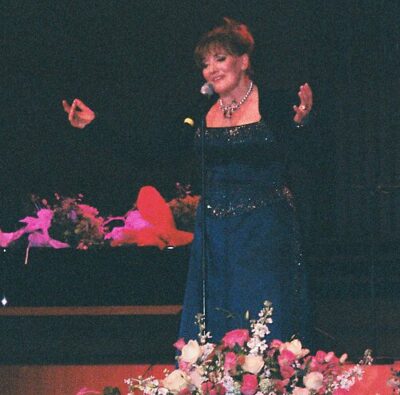
Tereza Kesovija
Tereza Kesovija is a Croatian pop singer. Born October 3, 1938, in Dubrovnik.
Facts
12 facts · 1 confirmed by two sources · 2 cited · 9 from one source
Where this comes from
Papalocal keeps its own record. It started from these sources; what each one said is kept here as it was copied, so a change on their side never changes this page by itself. Tap one to read its version.
What Wikidata says · copied November 16, 2026 · revision 2529965666
- Described as
- Croatian pop singer
- Other names
- Tereza Ana Kesovija
- Born
- October 3, 1938 · 4 references
- Born in
- Dubrovnik
- Citizen of
- Croatia
- Occupation
- singer
- Genre
- pop music
- Instrument
- voice
- Record label
- Croatia Records; Jugoton; iTunes
- Spouse
- Miro Ungar · 1 reference; Ronald Lopatny · 1 reference
- Website
- http://www.tereza-kesovija.com
- Wikipedias with a page
- 28
Wikidata item Q239256 (wikidata.org/wiki/Q239256), public domain (CC0). Copied November 16, 2026.
What Wikipedia says · copied November 16, 2026 · revision 1385701156
Tereza Ana Kesovija (pronounced [terěːza âna kesǒʋija]; born 3 October 1938) is an internationally acclaimed Croatian recording artist. She was one of the most recognizable figures on the music scene in the former Yugoslavia and is renowned for her wide vocal range and operatic style. She also had a successful career in France. She has held many concerts around the world, being one of the few Yugoslav musicians to have sold out shows in The Royal Albert Hall, L'Olympia and Carnegie Hall. She appeared twice as an entrant in the Eurovision Song Contest, representing Monaco in 1966 and Yugoslavia in 1972.
- Born, in its opening lines
- October 3, 1938
From the Wikipedia article “Tereza Kesovija” (en.wikipedia.org/wiki/Tereza_Kesovija), by its contributors, under CC BY-SA 4.0 (creativecommons.org/licenses/by-sa/4.0/). Copied November 16, 2026; not changed.
Confirmed Two sources agree. Cited One source, and it names where it got it. One source One source, without a reference of its own. Sources disagree The sources disagree. We show the best-supported value and keep theirs below.
