
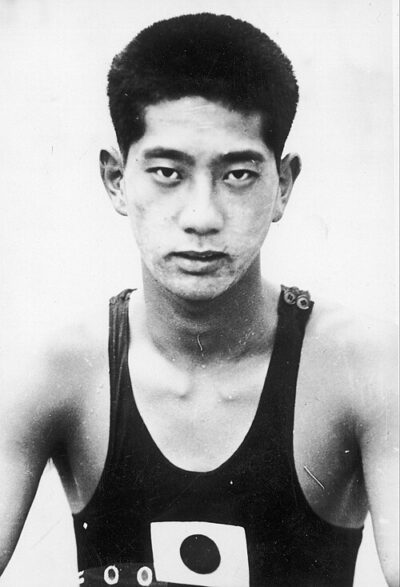
Tetsuo Hamuro
Tetsuo Hamuro was a swimmer. Born September 7, 1917, in Fukuoka. Died October 30, 2005, in Takaishi. Educated at Nihon University.
Facts
10 facts · 2 confirmed by two sources · 0 cited · 8 from one source
Where this comes from
Papalocal keeps its own record. It started from these sources; what each one said is kept here as it was copied, so a change on their side never changes this page by itself. Tap one to read its version.
What Wikidata says · copied November 17, 2026 · revision 2550433773
- Described as
- swimmer (1917–2005)
- Born
- September 7, 1917
- Died
- October 30, 2005
- Born in
- Fukuoka
- Died in
- Takaishi
- Citizen of
- Japan; Empire of Japan (–1947)
- Occupation
- swimmer · 1 reference; journalist
- Education
- Nihon University
- Sport
- competitive swimming · 1 reference
- Wikipedias with a page
- 24
Wikidata item Q938826 (wikidata.org/wiki/Q938826), public domain (CC0). Copied November 17, 2026.
What Wikipedia says · copied November 17, 2026 · revision 1361776831
Tetsuo Hamuro (葉室 鐵夫, Hamuro Tetsuo; 7 September 1917 – 30 October 2005) was a Japanese breaststroke swimmer. In 1935 he set a world record in the 200 m. Next year he won the gold medal in this event at the 1936 Olympics, setting a new Olympic record at 2:41.5. Hamuro swam the traditional breaststroke, while some of his competitors used the butterfly stroke, which was allowed at the time. Between 1935 and 1940 Hamuro never lost a race and won ten national breaststroke titles. After World War II he worked for the Mainichi newspaper as a sports journalist. In 1990, he was inducted into the International Swimming Hall of Fame.
Hamuro's wife was also a swimmer and a world champion in the masters category.
- Born, in its opening lines
- September 7, 1917
- Died, in its opening lines
- October 30, 2005
From the Wikipedia article “Tetsuo Hamuro” (en.wikipedia.org/wiki/Tetsuo_Hamuro), by its contributors, under CC BY-SA 4.0 (creativecommons.org/licenses/by-sa/4.0/). Copied November 17, 2026; not changed.
Confirmed Two sources agree. Cited One source, and it names where it got it. One source One source, without a reference of its own. Sources disagree The sources disagree. We show the best-supported value and keep theirs below.
