
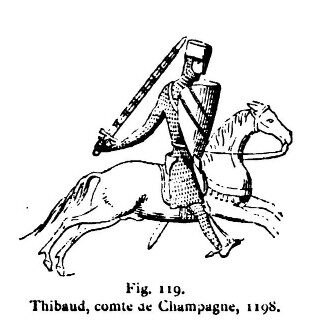
Theobald III, Count of Champagne
Theobald III, Count of Champagne was a Count of Champagne from 1197 to 1201. Born May 13, 1179, in Troyes. Died May 24, 1201, in Troyes.
Facts
13 facts · 2 confirmed by two sources · 0 cited · 11 from one source
Where this comes from
Papalocal keeps its own record. It started from these sources; what each one said is kept here as it was copied, so a change on their side never changes this page by itself. Tap one to read its version.
What Wikidata says · copied November 16, 2026 · revision 2553923453
- Described as
- Count of Champagne from 1197 to 1201
- Other names
- Thibaut III de Champagne, Thibaut III, Comte de Champagne, Theobald III
- Born
- May 13, 1179
- Died
- May 24, 1201
- Born in
- Troyes
- Died in
- Troyes
- Buried in
- Saint-Étienne (Troyes)
- Occupation
- aristocrat
- Spouse
- Blanche of Navarre, Countess of Champagne
- Children
- Theobald I of Navarre
- Father
- Henry I, Count of Champagne
- Mother
- Marie of France, Countess of Champagne
- Siblings
- Henry II, Count of Champagne; Marie of Champagne; Scholastique of Champagne
- Wikipedias with a page
- 30
Wikidata item Q282436 (wikidata.org/wiki/Q282436), public domain (CC0). Copied November 16, 2026.
What Wikipedia says · copied November 16, 2026 · revision 1371001708
Theobald III (French: Thibaut; 13 May 1179 – 24 May 1201) was Count of Champagne from 1197 to his death. He was designated heir by his older brother Henry II when the latter went to the Holy Land on the Third Crusade, and succeeded him upon his death. He cooperated closely with his uncle and suzerain King Philip II of France. He died young, and was succeeded by a posthumous son, Theobald IV, while his widow, Blanche of Navarre, ruled as regent.
- Born, in its opening lines
- May 13, 1179
- Died, in its opening lines
- May 24, 1201
From the Wikipedia article “Theobald III of Champagne” (en.wikipedia.org/wiki/Theobald_III_of_Champagne), by its contributors, under CC BY-SA 4.0 (creativecommons.org/licenses/by-sa/4.0/). Copied November 16, 2026; not changed.
Confirmed Two sources agree. Cited One source, and it names where it got it. One source One source, without a reference of its own. Sources disagree The sources disagree. We show the best-supported value and keep theirs below.
