
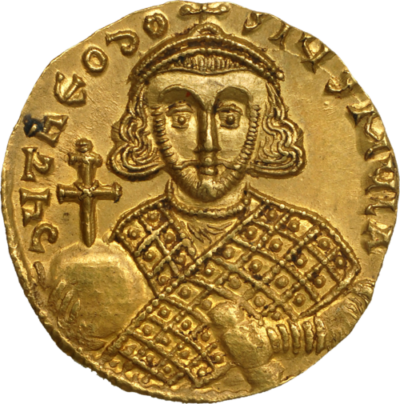
Theodosios III
Theodosios III was a Byzantine Emperor. Born 7th century, in Constantinople. Died 722, in Ephesus. Positions held include Byzantine emperor (715–717).
Facts
8 facts · 0 confirmed by two sources · 0 cited · 6 from one source · 2 where the sources disagree
What’s different
- Born: we show 7th century (Sources disagree). Wikipedia says 713
- Died: we show 722 (Sources disagree). Wikipedia says 715
Where this comes from
Papalocal keeps its own record. It started from these sources; what each one said is kept here as it was copied, so a change on their side never changes this page by itself. Tap one to read its version.
What Wikidata says · copied November 16, 2026 · revision 2569111556
- Described as
- Byzantine Emperor
- Born
- 7th century
- Died
- 722 · 1 reference
- Born in
- Constantinople
- Died in
- Ephesus
- Citizen of
- Byzantine Empire
- Occupation
- tax collector
- Positions held
- Byzantine emperor (715–717)
- Religion
- Eastern Orthodoxy
- Wikipedias with a page
- 51
Wikidata item Q41836 (wikidata.org/wiki/Q41836), public domain (CC0). Copied November 16, 2026.
What Wikipedia says · copied November 16, 2026 · revision 1375338742
Theodosius III (Greek: Θεοδόσιος, romanized: Theodósios) was the Byzantine emperor from c. May 715 to 25 March 717. Before rising to power and seizing the throne of the Byzantine Empire, he was a tax collector in Adramyttium. In 715, the Byzantine navy and the troops of the Opsician Theme, one of the Byzantine provinces, revolted against Emperor Anastasius II (r. 713–715), acclaiming the reluctant Theodosius as emperor. Theodosius led his troops to Chrysopolis and then Constantinople, the capital, seizing the city in November 715. Anastasius did not surrender until several months later, accepting exile in a monastery in return for safety. Many themes viewed Theodosius to be a puppet of the troops of the Opsician Theme, and his legitimacy was denied by the Anatolics and the Armeniacs under their respective strategoi (generals) Leo the Isaurian and Artabasdos.
Leo declared himself emperor in the summer of 716 and allied himself with the Umayyad Caliphate, the Islamic empire; Theodosius sought aid from the Bulgarians under Khan Tervel (r. 700–721), setting a firm border at Thrace and ceding the Zagoria region to the Bulgarians, as well as stipulating the payment of tribute to them. Leo then marched his troops to Constantinople, seizing the city of Nicomedia, and capturing many officials, including Theodosius's son, also named Theodosius. With his son in captivity, Theodosius took the advice of Patriarch Germanus and the Byzantine Senate, and negotiated with Leo, agreeing to abdicate and recognize Leo as emperor. Leo entered Constantinople and definitively seized power on 25 March 717, allowing Theodosius and his son to retire to a monastery. Exactly when Theodosius died is uncertain, but it may have been on 24 July 754.
- Born, in its opening lines
- 713
- Died, in its opening lines
- 715
From the Wikipedia article “Theodosius III” (en.wikipedia.org/wiki/Theodosius_III), by its contributors, under CC BY-SA 4.0 (creativecommons.org/licenses/by-sa/4.0/). Copied November 16, 2026; not changed.
Confirmed Two sources agree. Cited One source, and it names where it got it. One source One source, without a reference of its own. Sources disagree The sources disagree. We show the best-supported value and keep theirs below.
