
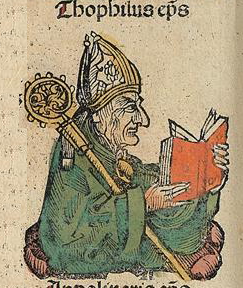
Theophilus of Antioch
Theophilus of Antioch was a Patriarch of Antioch from c.169 to c.183. Born 2nd century. Died October 18, 183, in Antioch. Positions held include bishop (169–182).
Facts
7 facts · 0 confirmed by two sources · 1 cited · 6 from one source
Where this comes from
Papalocal keeps its own record. It started from these sources; what each one said is kept here as it was copied, so a change on their side never changes this page by itself. Tap one to read its version.
What Wikidata says · copied November 16, 2026 · revision 2568759282
- Described as
- Patriarch of Antioch from c.169 to c.183
- Born
- 2nd century
- Died
- October 18, 183
- Died in
- Antioch
- Occupation
- presbyter; bishop · 1 reference
- Positions held
- bishop (169–182)
- Religion
- Christianity
- Wikipedias with a page
- 46
Wikidata item Q220787 (wikidata.org/wiki/Q220787), public domain (CC0). Copied November 16, 2026.
What Wikipedia says · copied November 16, 2026 · revision 1367641363
There is also a Theophilus of Alexandria (c. 412)
Theophilus of Antioch (Greek: Θεόφιλος ὁ Ἀντιοχεύς) was Patriarch of Antioch from 169 until 183. He succeeded Eros of Antioch c. 169, and was succeeded by Maximus I c. 183, according to Henry Fynes Clinton, but these dates are only approximations. His death probably occurred between 183 and 185.
His writings (the only surviving one being his apology to Autolycus) indicate that he was born a pagan, not far from the Tigris and Euphrates, and was led to embrace Christianity by studying the Holy Scriptures, especially the prophetical books. He makes no reference to his office in his surviving writings, nor is any other fact in his life recorded. Eusebius, however, speaks of the zeal which he and the other chief shepherds displayed in driving away the heretics who were attacking Christ's flock, with special mention of his work against Marcion. He made contributions to the departments of Christian literature, polemics, exegetics, and apologetics. William Sanday describes him as "one of the precursors of that group of writers who, from Irenaeus to Cyprian, not only break the obscurity which rests on the earliest history of the Church, but alike in the East and in the West carry it to the front in literary eminence, and distance all their heathen contemporaries".
From the Wikipedia article “Theophilus of Antioch” (en.wikipedia.org/wiki/Theophilus_of_Antioch), by its contributors, under CC BY-SA 4.0 (creativecommons.org/licenses/by-sa/4.0/). Copied November 16, 2026; not changed.
Confirmed Two sources agree. Cited One source, and it names where it got it. One source One source, without a reference of its own. Sources disagree The sources disagree. We show the best-supported value and keep theirs below.
