
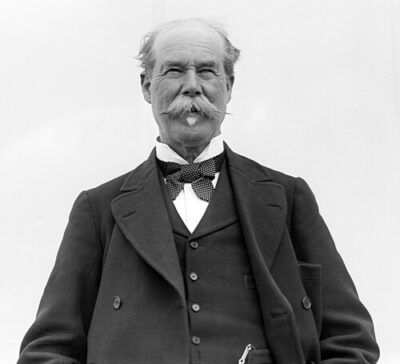
Thomas Lipton
Thomas Lipton was a British tea merchant and yacht racer. Born May 10, 1848, in Glasgow. Died October 2, 1931, in London. Known for tea. Awards include Knight Commander of the Royal Victorian Order and baronet.
Facts
12 facts · 2 confirmed by two sources · 1 cited · 9 from one source
Where this comes from
Papalocal keeps its own record. It started from these sources; what each one said is kept here as it was copied, so a change on their side never changes this page by itself. Tap one to read its version.
What Wikidata says · copied November 16, 2026 · revision 2567240666
- Described as
- British tea merchant and yacht racer (1848-1931)
- Other names
- Thomas Johnstone Lipton, Sir Thomas Johnstone Lipton, 1st Baronet, Sir Thomas Lipton, Sir Thomas Johnstone Lipton
- Born
- May 10, 1848
- Died
- October 2, 1931
- Born in
- Glasgow
- Died in
- London
- Buried in
- Southern Necropolis, Glasgow
- Citizen of
- United Kingdom
- Occupation
- merchant · 1 reference; entrepreneur; athlete · 1 reference
- Known for
- tea · 1 reference
- Awards
- Knight Commander of the Royal Victorian Order; baronet
- Wikipedias with a page
- 32
Wikidata item Q506188 (wikidata.org/wiki/Q506188), public domain (CC0). Copied November 16, 2026.
What Wikipedia says · copied November 16, 2026 · revision 1374883763
Sir Thomas Johnstone Lipton, 1st Baronet (10 May 1848 – 2 October 1931) was a Scottish businessman and company founder of Lipton Tea, merchant, philanthropist and yachtsman who lost 5 America's Cup races.
Lipton used extensive advertising to promote his chain of grocery stores and the Lipton tea brand. He was also a yachtsman, challenging for the America's Cup yacht racefive times between 1899 and 1930.
- Born, in its opening lines
- May 10, 1848
- Died, in its opening lines
- October 2, 1931
From the Wikipedia article “Thomas Lipton” (en.wikipedia.org/wiki/Thomas_Lipton), by its contributors, under CC BY-SA 4.0 (creativecommons.org/licenses/by-sa/4.0/). Copied November 16, 2026; not changed.
Confirmed Two sources agree. Cited One source, and it names where it got it. One source One source, without a reference of its own. Sources disagree The sources disagree. We show the best-supported value and keep theirs below.
