
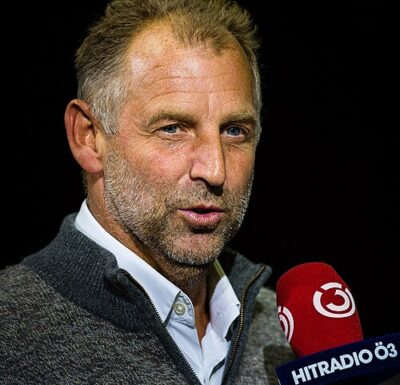
Thomas Muster
Thomas Muster is an Austrian tennis player. Born October 2, 1967, in Leibnitz. Awards include Grand Gold Decoration of Styria and Grand Decoration of Honour for Services to the Republic of Austria.
Facts
12 facts · 1 confirmed by two sources · 4 cited · 7 from one source
Where this comes from
Papalocal keeps its own record. It started from these sources; what each one said is kept here as it was copied, so a change on their side never changes this page by itself. Tap one to read its version.
What Wikidata says · copied November 16, 2026 · revision 2529955635
- Described as
- Austrian tennis player
- Born
- October 2, 1967 · 3 references
- Born in
- Leibnitz · 1 reference
- Citizen of
- Austria
- Occupation
- tennis player (1985–1999) · 1 reference; tennis coach; athlete · 1 reference
- Sport
- tennis · 1 reference
- Awards
- Grand Gold Decoration of Styria; Grand Decoration of Honour for Services to the Republic of Austria
- Lived in
- Leibnitz
- Height
- 1.80 m (5 ft 11 in)
- Website
- http://www.thomasmuster.at/
- Wikipedias with a page
- 46
Wikidata item Q219966 (wikidata.org/wiki/Q219966), public domain (CC0). Copied November 16, 2026.
What Wikipedia says · copied November 16, 2026 · revision 1384426728
Thomas Muster (German: [ˈmʊstɐ]; born 2 October 1967) is an Austrian former professional tennis player. He was ranked as the world No. 1 in men's singles by the Association of Tennis Professionals (ATP). Muster won 44 ATP Tour-level singles titles, including the 1995 French Open and eight Masters titles. One of the world's leading clay court players in the 1990s, at his peak he was called "The King of Clay". He is the first Austrian to win a major singles title, followed by Dominic Thiem at the 2020 US Open.
- Born, in its opening lines
- October 2, 1967
From the Wikipedia article “Thomas Muster” (en.wikipedia.org/wiki/Thomas_Muster), by its contributors, under CC BY-SA 4.0 (creativecommons.org/licenses/by-sa/4.0/). Copied November 16, 2026; not changed.
Confirmed Two sources agree. Cited One source, and it names where it got it. One source One source, without a reference of its own. Sources disagree The sources disagree. We show the best-supported value and keep theirs below.
