
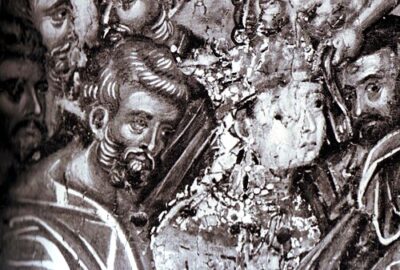
Thomas Preljubović was a Ruler of Epirus in Ioannina. Died December 23, 1384, in Ioannina.
Facts
10 facts · 0 confirmed by two sources · 0 cited · 10 from one source
Where this comes from
Papalocal keeps its own record. It started from these sources; what each one said is kept here as it was copied, so a change on their side never changes this page by itself. Tap one to read its version.
What Wikidata says · copied November 18, 2026 · revision 2564102877
- Described as
- Ruler of Epirus in Ioannina
- Other names
- Thomas Komnenus Palaeologus
- Died
- December 23, 1384
- Born in
- Ioannina
- Died in
- Ioannina
- Citizen of
- Serbian Empire; Byzantine Empire
- Occupation
- monarch
- Spouse
- Maria Angelina Doukaina Palaiologina
- Children
- Irene Preljubović
- Father
- Preljub
- Religion
- Serbian Orthodox Church
- Wikipedias with a page
- 22
Wikidata item Q718006 (wikidata.org/wiki/Q718006), public domain (CC0). Copied November 18, 2026.
What Wikipedia says · copied November 18, 2026 · revision 1386257458
Thomas Preljubović (Serbian: Тома Прељубовић, romanized: Toma Preljubović; Greek: Θωμάς Κομνηνός Παλαιολόγος, romanized: Thōmas Komnēnos Palaiologos) was ruler of the Despotate of Epirus in Ioannina from 1367 to his death in 1384. Thomas was an unpopular ruler and is appraised very negatively by his contemporaries. On December 23, 1384 he was stabbed to death by his guards at dawn. The conspiracy of the faction which overthrew him involved his wife Maria Angelina who succeeded him.
A great deal of his rule was preoccupied with fighting against the Albanians of the Despotate of Arta to his south, the Zenebishi family to his north and the Mazreku and other clans to his northwest. Thomas gave himself the self-styled epithet of Albanian-slayer (Greek: Αλβανοκτόνος/Αλβανιτόκτονος) after torturing Albanian prisoners in order to terrify his enemies.
From the Wikipedia article “Thomas Preljubović” (en.wikipedia.org/wiki/Thomas_Preljubović), by its contributors, under CC BY-SA 4.0 (creativecommons.org/licenses/by-sa/4.0/). Copied November 18, 2026; not changed.
Confirmed Two sources agree. Cited One source, and it names where it got it. One source One source, without a reference of its own. Sources disagree The sources disagree. We show the best-supported value and keep theirs below.
