
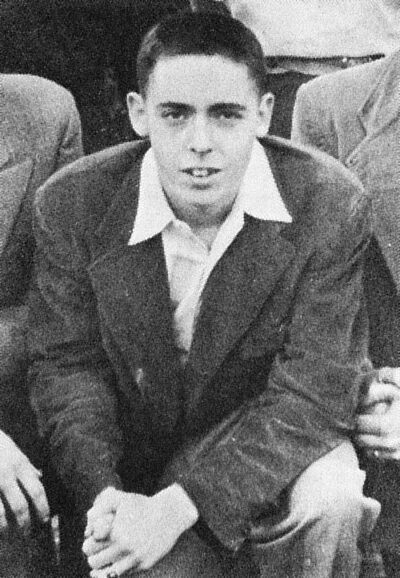
Thomas Pynchon
Thomas Pynchon is an American novelist. Born May 8, 1937, in Glen Cove. Known for V., The Crying of Lot 49 and Gravity's Rainbow. Educated at Cornell University and Oyster Bay High School. Awards include MacArthur Fellows Program, National Book Award and William Faulkner Foundation Award.
Facts
26 facts · 1 confirmed by two sources · 6 cited · 19 from one source
Where this comes from
Papalocal keeps its own record. It started from these sources; what each one said is kept here as it was copied, so a change on their side never changes this page by itself. Tap one to read its version.
What Wikidata says · copied November 13, 2026 · revision 2565596021
- Described as
- American novelist (born 1937)
- Other names
- Thomas Ruggles Pynchon, Thomas Ruggles Pynchon, Jr.
- Born
- May 8, 1937 · 10 references
- Born in
- Glen Cove · 2 references
- Citizen of
- United States
- Occupation
- writer · 3 references; novelist; essayist; science fiction writer
- Worked for
- Boeing (1960–1962) · 1 reference
- Education
- Cornell University (1953–1959); Oyster Bay High School (–1953) · 1 reference
- Known for
- V.; The Crying of Lot 49; Gravity's Rainbow; Vineland; Mason & Dixon; Against the Day; Inherent Vice; Bleeding Edge
- Awards
- MacArthur Fellows Program (1988) · 1 reference; National Book Award (1974) · 1 reference; William Faulkner Foundation Award (1964); William Dean Howells Medal of the American Academy of Arts and Letters (1975)
- Father
- Thomas Ruggles Pynchon Sr. · 1 reference
- Mother
- Catherine Frances Pynchon · 1 reference
- Military branch
- United States Navy (1955–1957)
- Lived in
- Manhattan
- Wikipedias with a page
- 77
Wikidata item Q35155 (wikidata.org/wiki/Q35155), public domain (CC0). Copied November 13, 2026.
What Wikipedia says · copied November 13, 2026 · revision 1385419839
Thomas Ruggles Pynchon Jr. ( PIN-chon, commonly PIN-chən; born May 8, 1937) is an American novelist. He is known for his dense, complex works of postmodern fiction, which are distinguished by their paranoid tone, absurd humor, and references to history, art, science, and popular culture. He is widely regarded as one of the greatest American novelists. Pynchon is notoriously reclusive. Few photographs of him have been published, and rumors about his location and identity have circulated since the 1960s.
Pynchon served two years in the United States Navy and earned an English degree from Cornell University. After publishing several short stories in the late 1950s and early 1960s, he began composing the novels for which he is best known: V. (1963), The Crying of Lot 49 (1966), and Gravity's Rainbow (1973). For the last, Pynchon won the 1974 U.S. National Book Award for Fiction. Pynchon followed with the novels Vineland (1990), Mason & Dixon (1997), Against the Day (2006), Inherent Vice (2009), which was adapted for film in 2014, and Bleeding Edge (2013). Pynchon's latest novel, Shadow Ticket, was published in 2025.
- Born, in its opening lines
- May 8, 1937
From the Wikipedia article “Thomas Pynchon” (en.wikipedia.org/wiki/Thomas_Pynchon), by its contributors, under CC BY-SA 4.0 (creativecommons.org/licenses/by-sa/4.0/). Copied November 13, 2026; not changed.
Confirmed Two sources agree. Cited One source, and it names where it got it. One source One source, without a reference of its own. Sources disagree The sources disagree. We show the best-supported value and keep theirs below.
