
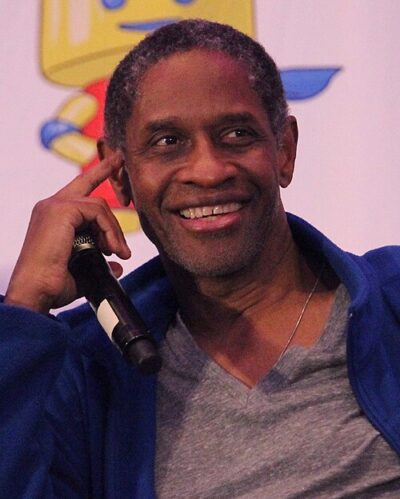
Tim Russ
Tim Russ is an American actor. Born June 22, 1956, in Washington, D.C.. Educated at Illinois State University and St. Edward's University.
Facts
15 facts · 1 confirmed by two sources · 0 cited · 14 from one source
Where this comes from
Papalocal keeps its own record. It started from these sources; what each one said is kept here as it was copied, so a change on their side never changes this page by itself. Tap one to read its version.
What Wikidata says · copied November 15, 2026 · revision 2552708180
- Described as
- American actor
- Other names
- Timothy Darrell Russ
- Born
- June 22, 1956 · 1 reference
- Born in
- Washington, D.C.
- Citizen of
- United States
- Occupation
- television actor; film actor; actor; film director; screenwriter; writer; voice actor; singer · 1 reference
- Education
- Illinois State University; St. Edward's University · 1 reference; Rome Free Academy
- Website
- https://timrusswebpage.com
- Wikipedias with a page
- 32
Wikidata item Q452232 (wikidata.org/wiki/Q452232), public domain (CC0). Copied November 15, 2026.
What Wikipedia says · copied November 15, 2026 · revision 1384430152
Timothy Darrell Russ (born June 22, 1956) is an American actor, musician, screenwriter, director and amateur astronomer. His roles include Lieutenant Commander Tuvok on Star Trek: Voyager; Robert Johnson in Crossroads (1986); Casey in East of Hope Street (1998); Frank on Samantha Who?; Principal Franklin on the Nickelodeon sitcom iCarly; D. C. Montana on The Highwaymen (1987–1988). He also had a brief role in Spaceballs (1987). He appeared in The Rookie: Feds (2022) and reprised his role as Captain Tuvok on Season 3 of Star Trek: Picard.
- Born, in its opening lines
- June 22, 1956
From the Wikipedia article “Tim Russ” (en.wikipedia.org/wiki/Tim_Russ), by its contributors, under CC BY-SA 4.0 (creativecommons.org/licenses/by-sa/4.0/). Copied November 15, 2026; not changed.
Confirmed Two sources agree. Cited One source, and it names where it got it. One source One source, without a reference of its own. Sources disagree The sources disagree. We show the best-supported value and keep theirs below.
