
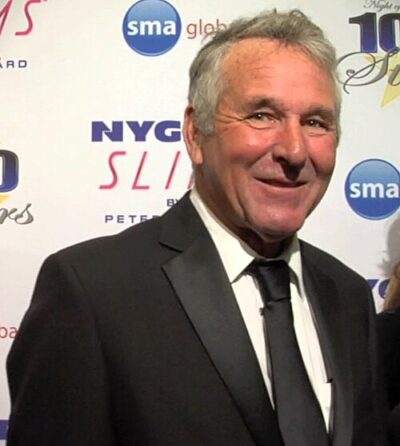
Timothy Bottoms
Timothy Bottoms is an American actor and film producer. Born August 30, 1951, in Santa Barbara. Educated at Santa Barbara High School.
Facts
9 facts · 1 confirmed by two sources · 1 cited · 7 from one source
Where this comes from
Papalocal keeps its own record. It started from these sources; what each one said is kept here as it was copied, so a change on their side never changes this page by itself. Tap one to read its version.
What Wikidata says · copied November 15, 2026 · revision 2552726620
- Described as
- American actor and film producer
- Other names
- Timothy James Bottoms
- Born
- August 30, 1951 · 1 reference
- Born in
- Santa Barbara
- Citizen of
- United States
- Occupation
- television actor; film actor · 1 reference; actor; film producer; stage actor · 1 reference
- Education
- Santa Barbara High School · 1 reference
- Wikipedias with a page
- 25
Wikidata item Q1305044 (wikidata.org/wiki/Q1305044), public domain (CC0). Copied November 15, 2026.
What Wikipedia says · copied November 15, 2026 · revision 1381655204
Timothy James Bottoms (born August 30, 1951) is an American actor and film producer. He is best known for playing the lead in Johnny Got His Gun (1971); Sonny Crawford in The Last Picture Show (1971), where he and his fellow co-stars, Cybill Shepherd and Jeff Bridges, rose to fame; and as James Hart, the first-year law student who battles with Prof. Kingsfield, in the film adaptation The Paper Chase (1973). He is also known for playing the main antagonist in the disaster film Rollercoaster (1977) and for playing President George W. Bush multiple times, including on the sitcom That's My Bush!, the comedy film The Crocodile Hunter: Collision Course and the docudrama DC 9/11: Time of Crisis.
- Born, in its opening lines
- August 30, 1951
From the Wikipedia article “Timothy Bottoms” (en.wikipedia.org/wiki/Timothy_Bottoms), by its contributors, under CC BY-SA 4.0 (creativecommons.org/licenses/by-sa/4.0/). Copied November 15, 2026; not changed.
Confirmed Two sources agree. Cited One source, and it names where it got it. One source One source, without a reference of its own. Sources disagree The sources disagree. We show the best-supported value and keep theirs below.
