
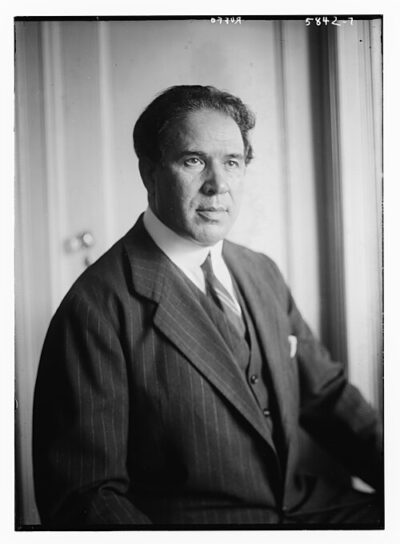
Titta Ruffo
Titta Ruffo was an Italian opera singer. Born June 9, 1877, in Pisa. Died July 5, 1953, in Florence.
Facts
13 facts · 2 confirmed by two sources · 5 cited · 6 from one source
Where this comes from
Papalocal keeps its own record. It started from these sources; what each one said is kept here as it was copied, so a change on their side never changes this page by itself. Tap one to read its version.
What Wikidata says · copied November 18, 2026 · revision 2527082942
- Described as
- Italian opera singer (1877-1953)
- Born
- June 9, 1877 · 4 references
- Died
- July 5, 1953 · 2 references
- Born in
- Pisa · 2 references
- Died in
- Florence · 2 references
- Buried in
- monumental cemetery of Milan · 1 reference
- Cause of death
- myocardial infarction
- Citizen of
- Italy (1946–); Kingdom of Italy (–1946)
- Occupation
- opera singer · 2 references
- Instrument
- voice · 2 references
- Children
- Ruffo Titta junior
- Siblings
- Velia Titta; Ettore Titta
- Wikipedias with a page
- 20
Wikidata item Q714574 (wikidata.org/wiki/Q714574), public domain (CC0). Copied November 18, 2026.
What Wikipedia says · copied November 18, 2026 · revision 1384427777
Titta Ruffo (born Ruffo Cafiero Titta; 9 June 1877 – 5 July 1953) was an Italian operatic baritone who had a major international singing career. Known as the "Voce del leone" ("voice of the lion"), he was greatly admired, even by rival baritones, such as Giuseppe De Luca, who said of Ruffo: "His was not a voice, it was a miracle" (although not often published is the second part of De Luca's conclusion "which he [Ruffo] bawled away..."), and Victor Maurel, the creator of Verdi's Iago and Falstaff. Maurel said that the notes of Ruffo's upper register were the most glorious baritone sounds he had ever heard (see Pleasants, cited below). Indeed Walter Legge, the prominent classical record producer, went so far as to call Ruffo "a genius".
- Born, in its opening lines
- June 9, 1877
- Died, in its opening lines
- July 5, 1953
From the Wikipedia article “Titta Ruffo” (en.wikipedia.org/wiki/Titta_Ruffo), by its contributors, under CC BY-SA 4.0 (creativecommons.org/licenses/by-sa/4.0/). Copied November 18, 2026; not changed.
Confirmed Two sources agree. Cited One source, and it names where it got it. One source One source, without a reference of its own. Sources disagree The sources disagree. We show the best-supported value and keep theirs below.
