
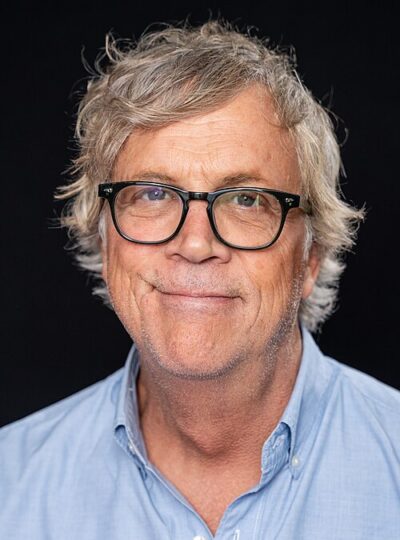
Todd Haynes
Todd Haynes is an American film director and screenwriter. Born January 2, 1961, in Encino. Educated at Brown University and Bard College. Awards include Sundance Film Festival U.S. Dramatic Grand Jury Prize Award, New York Film Critics Circle Award for Best Film and New York Film Critics Circle Award for Best Director.
Facts
23 facts · 1 confirmed by two sources · 7 cited · 15 from one source
Where this comes from
Papalocal keeps its own record. It started from these sources; what each one said is kept here as it was copied, so a change on their side never changes this page by itself. Tap one to read its version.
What Wikidata says · copied November 14, 2026 · revision 2559335432
- Described as
- American film director and screenwriter (born 1961)
- Born
- January 2, 1961 · 6 references
- Born in
- Encino · 3 references
- Citizen of
- United States · 3 references
- Occupation
- actor; film director · 3 references; screenwriter · 3 references; film producer · 1 reference; television director; director · 2 references
- Education
- Brown University; Bard College; Oakwood School, Los Angeles · 1 reference
- Awards
- Sundance Film Festival U.S. Dramatic Grand Jury Prize Award (1991); New York Film Critics Circle Award for Best Film (2002); New York Film Critics Circle Award for Best Director (2002); San Francisco Film Critics Circle Award for Best Director (2002); GLAAD Stephen F. Kolzak Award (2003); Satellite Award for Best Director (2003); Independent Spirit Award for Best Director (2003); Grand Jury Prize of the Venice Film Festival (2007)
- Religion
- atheism
- Lived in
- Portland
- Height
- 1.78 m (5 ft 10 in) · 1 reference
- Wikipedias with a page
- 39
Wikidata item Q446580 (wikidata.org/wiki/Q446580), public domain (CC0). Copied November 14, 2026.
What Wikipedia says · copied November 14, 2026 · revision 1381609777
Todd Haynes (; born January 2, 1961) is an American film director, screenwriter, and producer whose work is known for its engagement with melodrama, historical pastiche, and queer cinema. Across four decades, his films frequently explore the emotional and psychological consequences of social repression, particularly as they relate to sexuality, identity, illness, and conformity. Haynes is often associated with the New Queer Cinema movement of the early 1990s and is noted for reworking classical Hollywood forms — such as the woman’s picture and the biopic — to examine marginalized experiences and unspoken desire.
Haynes first gained public attention with his controversial short film Superstar: The Karen Carpenter Story (1987), which chronicles singer Karen Carpenter's life and death using Barbie dolls as actors. Superstar became a cult classic. His feature directorial debut, Poison (1991), a provocative exploration of AIDS-era perceptions and subversions, established him as a figure of a new transgressive cinema. Poison won the Sundance Film Festival's Grand Jury Prize.
Haynes received further acclaim for his second feature film, Safe (1995), a symbolic portrait of a housewife who develops multiple chemical sensitivity. Safe was later voted the best film of the 1990s by The Village Voice Film Poll. His next feature, Velvet Goldmine (1998), is a tribute to the 1970s glam rock era. The film received the Special Jury Prize for Best Artistic Contribution at the 1998 Cannes Film Festival.
Haynes gained acclaim and a measure of mainstream success with Far from Heaven (2002), receiving his first Academy Award nomination for Best Original Screenplay. He continued to direct critically lauded films such as I'm Not There (2007), Carol (2015), Wonderstruck (2017), Dark Waters (2019), and May December (2023), as well as the documentary film The Velvet Underground (2021). Haynes also directed and co-wrote the HBO mini-series Mildred Pierce (2011), for which he received three Primetime Emmy Award nominations.
- Born, in its opening lines
- January 2, 1961
From the Wikipedia article “Todd Haynes” (en.wikipedia.org/wiki/Todd_Haynes), by its contributors, under CC BY-SA 4.0 (creativecommons.org/licenses/by-sa/4.0/). Copied November 14, 2026; not changed.
Confirmed Two sources agree. Cited One source, and it names where it got it. One source One source, without a reference of its own. Sources disagree The sources disagree. We show the best-supported value and keep theirs below.
