
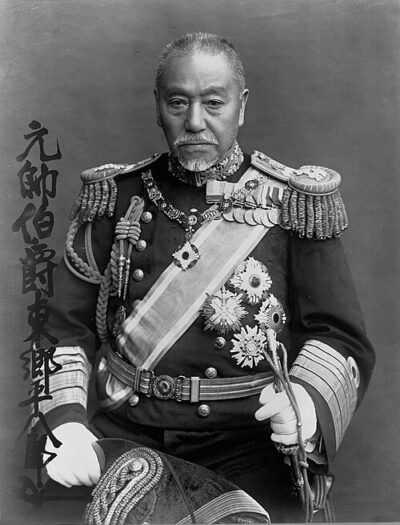
Tōgō Heihachirō
Tōgō Heihachirō was a Japanese admiral of the fleet. Born January 27, 1848, in Kajiya-chō. Died May 30, 1934, in Banchō. Positions held include Commanders-in-Chief of the Combined Fleet (1903–1905), member of the House of Peers and Imperial Japanese Navy General Staff (1905–1909). Known for Remarks by Admiral Togo at dispersal ceremony for the combined fleet. Educated at Burney's Academy and Thames Nautical Training College. Awards include Knight Grand Cross of the Royal Victorian Order, Grand Officer of the Legion of Honour and Order of the Rising Sun, 1st class.
Facts
45 facts · 2 confirmed by two sources · 2 cited · 41 from one source
Where this comes from
Papalocal keeps its own record. It started from these sources; what each one said is kept here as it was copied, so a change on their side never changes this page by itself. Tap one to read its version.
What Wikidata says · copied November 16, 2026 · revision 2561019428
- Described as
- Japanese admiral of the fleet (1848–1934)
- Other names
- Heihachirō Tōgō, Togo Heihachiro, Heihachiro Togo, Tougou Heihachirou, The Nelson of the East, Tōgō Nakagorō
- Born
- January 27, 1848 · 5 references
- Died
- May 30, 1934 · 6 references
- Born in
- Kajiya-chō · 1 reference
- Died in
- Banchō
- Buried in
- Tama Cemetery
- Cause of death
- head and neck cancer
- Name at birth
- 東郷仲五郎
- Citizen of
- Japan
- Occupation
- military officer; politician; samurai; admiral · 1 reference
- Positions held
- Commanders-in-Chief of the Combined Fleet (1903–1905); member of the House of Peers; Imperial Japanese Navy General Staff (1905–1909)
- Political party
- Kokuhonsha
- Worked for
- Naval War College
- Education
- Burney's Academy; Thames Nautical Training College; Britannia Royal Naval College
- Known for
- Remarks by Admiral Togo at dispersal ceremony for the combined fleet
- Awards
- Knight Grand Cross of the Royal Victorian Order (1912); Grand Officer of the Legion of Honour (1902); Order of the Rising Sun, 1st class (1901); Grand Cordon of the Supreme Order of the Chrysanthemum (1906); Order of the Rising Sun with Paulownia Flowers, 1st class · 1 reference; Order of the Golden Kite, 4th Class (1895); Order of Merit · 1 reference; Order of Leopold · 1 reference; Knight Grand Cross of the Order of Saints Maurice and Lazarus (1920); Cross of Naval Merit · 1 reference; Grand Cross of the Order of Polonia Restituta (1925) · 1 reference; Order of Saint Anna, 1st class (1902); Collar of the Supreme Order of the Chrysanthemum; Grand Cross of Naval Merit with white badge (1925) · 1 reference; Order of the Sacred Treasure, 6th class (1889)
- Children
- Hyō Tōgō; Minoru Tōgō
- Father
- Tōgō Sanetomo
- Siblings
- Tōgō Sanenaga; Tōgō Sanetake
- Military branch
- Imperial Japanese Navy
- Military rank
- admiral; gensui; gensui · 1 reference
- Wikipedias with a page
- 52
Wikidata item Q296785 (wikidata.org/wiki/Q296785), public domain (CC0). Copied November 16, 2026.
What Wikipedia says · copied November 16, 2026 · revision 1384692163
Tōgō Heihachirō (東郷 平八郎; 27 January 1848 – 30 May 1934) was a Japanese naval officer who served as a gensui or admiral of the fleet in the Imperial Japanese Navy and became one of Japan's greatest naval heroes. As Commander-in-Chief of the Combined Fleet during the Russo-Japanese War of 1904–1905, he successfully confined the Russian Pacific naval forces to Port Arthur before winning a decisive victory over a relieving fleet at Tsushima in May 1905. Western journalists called Tōgō "the Nelson of the East". He remains deeply revered as a national hero in Japan, with shrines and streets named in his honour.
- Born, in its opening lines
- January 27, 1848
- Died, in its opening lines
- May 30, 1934
From the Wikipedia article “Tōgō Heihachirō” (en.wikipedia.org/wiki/Tōgō_Heihachirō), by its contributors, under CC BY-SA 4.0 (creativecommons.org/licenses/by-sa/4.0/). Copied November 16, 2026; not changed.
Confirmed Two sources agree. Cited One source, and it names where it got it. One source One source, without a reference of its own. Sources disagree The sources disagree. We show the best-supported value and keep theirs below.
