
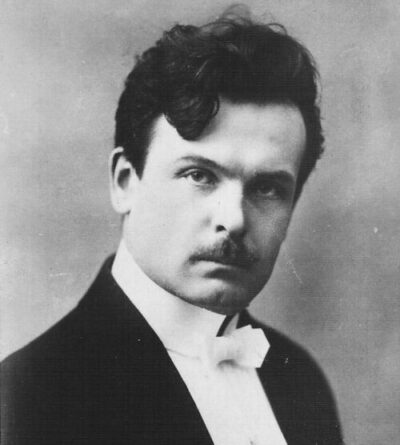
Toivo Kuula
Toivo Kuula was a Finnish composer. Born July 7, 1883, in Vaasa. Died May 18, 1918, in Viipuri provincial hospital. Educated at Sibelius Academy.
Facts
20 facts · 2 confirmed by two sources · 8 cited · 9 from one source · 1 where the sources disagree
What’s different
- Born in: we show Vaasa (Sources disagree). Wikidata also lists Alavus
Where this comes from
Papalocal keeps its own record. It started from these sources; what each one said is kept here as it was copied, so a change on their side never changes this page by itself. Tap one to read its version.
What Wikidata says · copied November 18, 2026 · revision 2568174506
- Described as
- Finnish composer (1883–1918)
- Other names
- Toivo Timoteus Kuula
- Born
- July 7, 1883 · 7 references
- Died
- May 18, 1918 · 7 references
- Born in
- Alavus · 1 reference; Vaasa · 2 references
- Died in
- Viipuri provincial hospital · 1 reference
- Buried in
- Hietaniemi cemetery · 1 reference
- Cause of death
- shooting (1918) · 1 reference
- Name at birth
- Toivo Timoteus Kuula
- Citizen of
- Finland (1917–); Grand Duchy of Finland (–1917)
- Occupation
- conductor; composer · 1 reference
- Education
- Sibelius Academy
- Genre
- classical music; choral music · 1 reference; chamber music · 1 reference; solo singing · 1 reference
- Instrument
- violin · 1 reference
- Spouse
- Alma Kuula (1914–1918)
- Children
- Sinikka Kuula
- Father
- Matti Kuula
- Wikipedias with a page
- 21
Wikidata item Q494964 (wikidata.org/wiki/Q494964), public domain (CC0). Copied November 18, 2026.
What Wikipedia says · copied November 18, 2026 · revision 1370780611
Toivo Timoteus Kuula (7 July 1883 – 18 May 1918) was a Finnish composer and conductor of the late-Romantic and early-modern periods, who emerged in the wake of Jean Sibelius, under whom he studied privately from 1906 to 1908. The core of Kuula's oeuvre are his many works for voice and orchestra, in particular the Stabat mater (1914–18; completed by Madetoja), The Sea-Bathing Maidens (1910), Son of a Slave (1910), and The Maiden and the Boyar's Son (1912). In addition he also composed two Ostrobothnian Suites for orchestra and left an unfinished symphony at the time of his murder in 1918 in a drunken quarrel.
- Born, in its opening lines
- July 7, 1883
- Died, in its opening lines
- May 18, 1918
From the Wikipedia article “Toivo Kuula” (en.wikipedia.org/wiki/Toivo_Kuula), by its contributors, under CC BY-SA 4.0 (creativecommons.org/licenses/by-sa/4.0/). Copied November 18, 2026; not changed.
Confirmed Two sources agree. Cited One source, and it names where it got it. One source One source, without a reference of its own. Sources disagree The sources disagree. We show the best-supported value and keep theirs below.
