
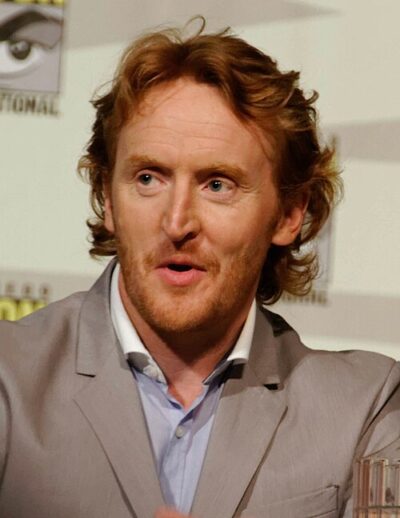
Tony Curran
Tony Curran is a Scottish actor. Born December 13, 1969, in Glasgow. Educated at Royal Conservatoire of Scotland and Holyrood Secondary School. Awards include British Independent Film Awards and BAFTA Scotland.
Facts
10 facts · 0 confirmed by two sources · 4 cited · 6 from one source
Where this comes from
Papalocal keeps its own record. It started from these sources; what each one said is kept here as it was copied, so a change on their side never changes this page by itself. Tap one to read its version.
What Wikidata says · copied November 17, 2026 · revision 2567824952
- Described as
- Scottish actor
- Other names
- Anthony "Tony" Curran
- Born
- December 13, 1969 · 2 references
- Born in
- Glasgow · 1 reference
- Citizen of
- United Kingdom
- Occupation
- actor · 1 reference; film actor · 1 reference; television actor
- Education
- Royal Conservatoire of Scotland; Holyrood Secondary School
- Awards
- British Independent Film Awards (2006); BAFTA Scotland (2006)
- Wikipedias with a page
- 27
Wikidata item Q711054 (wikidata.org/wiki/Q711054), public domain (CC0). Copied November 17, 2026.
What Wikipedia says · copied November 17, 2026 · revision 1372296239
Tony Curran is a Scottish actor who has appeared in the film Underworld: Evolution (2006), the television series Doctor Who (2010), the miniseries Roots (2016), and the Netflix historical drama film Outlaw King (2018). He appears in different minor roles in Marvel Cinematic Universe productions, including the film Thor: The Dark World (2013), the second season of the Netflix series Daredevil (2016), and the Disney+ miniseries Secret Invasion (2023). In late 2022, Curran starred in the BBC drama Mayflies. In the 2025 Starz streaming series Outlander: Blood of My Blood, he appears as Simon Fraser, Lord Lovat.
From the Wikipedia article “Tony Curran” (en.wikipedia.org/wiki/Tony_Curran), by its contributors, under CC BY-SA 4.0 (creativecommons.org/licenses/by-sa/4.0/). Copied November 17, 2026; not changed.
Confirmed Two sources agree. Cited One source, and it names where it got it. One source One source, without a reference of its own. Sources disagree The sources disagree. We show the best-supported value and keep theirs below.
