
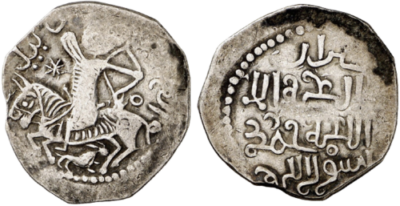
Töregene Khatun
Töregene Khatun was a Great Khatun of the Mongul Empire. Born 1185. Died 1247. Positions held include Khatun (1241–1246).
Facts
8 facts · 0 confirmed by two sources · 1 cited · 6 from one source · 1 where the sources disagree
What’s different
- Died: we show 1247 (Sources disagree). Wikidata also lists 1246
Where this comes from
Papalocal keeps its own record. It started from these sources; what each one said is kept here as it was copied, so a change on their side never changes this page by itself. Tap one to read its version.
What Wikidata says · copied November 16, 2026 · revision 2522927523
- Described as
- Great Khatun of the Mongul Empire
- Other names
- Beierzhijin Tuoliegena, Doregene Qatun, Doregene-Qatun
- Born
- 1185
- Died
- 1247 · 1 reference; 1246
- Citizen of
- Yuan dynasty · 1 reference
- Occupation
- regent
- Positions held
- Khatun (1241–1246)
- Spouse
- Ögedei Khan
- Children
- Güyük Khan
- Father
- Khutu
- Wikipedias with a page
- 34
Wikidata item Q1072396 (wikidata.org/wiki/Q1072396), public domain (CC0). Copied November 16, 2026.
What Wikipedia says · copied November 16, 2026 · revision 1380521397
Töregene Khatun (also Turakina and Nai-ma-chen; died 1246) was the Great Khatun and regent of the Mongol Empire from the death of her husband Ögedei Khan in 1241 until the election of her eldest son Güyük Khan in 1246.
Many of Töregene's retroactive descriptions come from Chinese sources, such as the History of Yuan, and Persian sources, such as those written by Minhaj-i Siraj Juzjani and Rashid al-Din Hamadan, take a negative stance on her reign. Töregene is seen as a smart ruler, but one who was overly vengeful and too unwilling to work with Mongol nobility. However, this characterization has been challenged as political in nature due to 13th and 14th century politics. Retroactive characterizations have emphasized Töregene's success in an era where women were given few opportunities to be global leaders.
From the Wikipedia article “Töregene Khatun” (en.wikipedia.org/wiki/Töregene_Khatun), by its contributors, under CC BY-SA 4.0 (creativecommons.org/licenses/by-sa/4.0/). Copied November 16, 2026; not changed.
Confirmed Two sources agree. Cited One source, and it names where it got it. One source One source, without a reference of its own. Sources disagree The sources disagree. We show the best-supported value and keep theirs below.
