
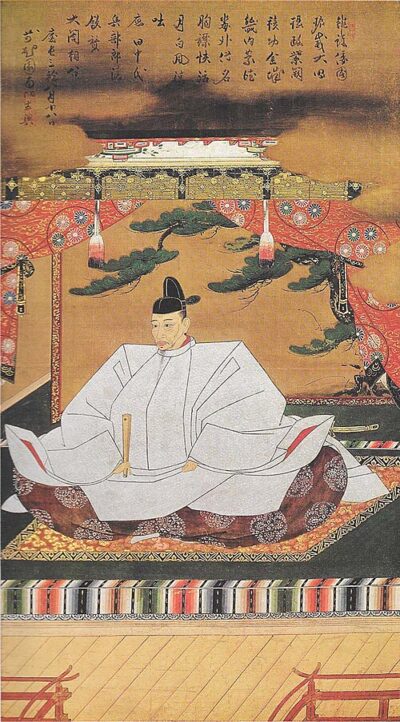
Toyotomi Hideyoshi
Toyotomi Hideyoshi was a Japanese samurai and daimyo. Born March 17, 1537, in Nakamura-ku. Died September 18, 1598, in Fushimi Castle. Positions held include kampaku (1585–1591), Daijō-daijin (1587–1598) and daimyo.
Facts
30 facts · 2 confirmed by two sources · 4 cited · 24 from one source
Where this comes from
Papalocal keeps its own record. It started from these sources; what each one said is kept here as it was copied, so a change on their side never changes this page by itself. Tap one to read its version.
What Wikidata says · copied November 16, 2026 · revision 2565551238
- Described as
- Japanese samurai and daimyo (1537–1598)
- Born
- March 17, 1537
- Died
- September 18, 1598 · 5 references
- Born in
- Nakamura-ku · 1 reference
- Died in
- Fushimi Castle
- Buried in
- Japan
- Citizen of
- Japan
- Occupation
- politician · 1 reference; military commander; ashigaru; daimyo · 1 reference
- Positions held
- kampaku (1585–1591); Daijō-daijin (1587–1598); daimyo; Dainagon; Naidaijin
- Spouse
- Nene; Yodo-dono · 1 reference; Kyōgoku Tatsuko; Kai-hime; Kōnomae · 1 reference; Minami Dono
- Children
- Toyotomi Hideyori; Toyotomi Tsurumatsu; Hashiba Hidekatsu · 1 reference
- Father
- Kinoshita Yaemon
- Mother
- Ōmandokoro
- Siblings
- Asahihime · 1 reference; Toyotomi Hidenaga; Tomo
- Religion
- Shinto
- Wikipedias with a page
- 78
Wikidata item Q187550 (wikidata.org/wiki/Q187550), public domain (CC0). Copied November 16, 2026.
What Wikipedia says · copied November 16, 2026 · revision 1384644875
Toyotomi Hideyoshi (豊臣 秀吉; Japanese pronunciation: [tò̞.jó̞.tó̞.mʲí | çì.dé̞.jò̞.ɕì, -mʲí çí-, -jó̞.ɕí]; March 17, 1537 – September 18, 1598), otherwise known as Kinoshita Tōkichirō (木下 藤吉郎) and Hashiba Hideyoshi (羽柴 秀吉), was a Japanese samurai and daimyō (feudal lord) of the late Sengoku and Azuchi–Momoyama periods, regarded as the second "Great Unifier" of Japan. He rose to the rank and title of kampaku (関白, Imperial Regent) and daijō-daijin (太政大臣, Chancellor of the Realm), the highest offices at the imperial court. He was the first commoner to become kampaku. He then passed the position and title of kampaku to his nephew, Toyotomi Hidetsugu. He remained in power as Taikō (太閤), the title of a retired kampaku, until his death.
Hideyoshi rose from a peasant background as a retainer of the prominent lord Oda Nobunaga to become one of the most powerful men in Japanese history. He distinguished himself in many of Nobunaga's campaigns. After Nobunaga was killed in the Honnō-ji incident in 1582, Hideyoshi defeated the lord's assassin, Akechi Mitsuhide, at the Battle of Yamazaki and became his successor. Hideyoshi then continued Nobunaga's campaign to unify Japan, which brought the Sengoku period to a close.
Hideyoshi became the de facto leader of Japan and acquired the prestigious positions of daijō-daijin and kampaku by the mid-1580s. He conquered Shikoku in 1585 and Kyūshū in 1587, and completed the unification by winning the Siege of Odawara in 1590 and crushing the Kunohe rebellion in 1591. With the unification of Japan complete, Hideyoshi launched the Japanese invasions of Korea in 1592. Early success gave way to a military stalemate that damaged his prestige before his death in 1598. Hideyoshi's young son and successor Toyotomi Hideyori was displaced by Tokugawa Ieyasu at the Battle of Sekigahara in 1600, which led to the founding of the Tokugawa shogunate.
Hideyoshi's rule spans most of Japan's Azuchi–Momoyama period, which is named in part after his Momoyama Castle. Hideyoshi left an influential and lasting legacy in Japan, including Osaka Castle, the Tokugawa class system, the restriction on the possession of weapons to the samurai (the sword hunt), and the construction and restoration of many temples, some of which are still visible in Kyoto.
- Born, in its opening lines
- March 17, 1537
- Died, in its opening lines
- September 18, 1598
From the Wikipedia article “Toyotomi Hideyoshi” (en.wikipedia.org/wiki/Toyotomi_Hideyoshi), by its contributors, under CC BY-SA 4.0 (creativecommons.org/licenses/by-sa/4.0/). Copied November 16, 2026; not changed.
Confirmed Two sources agree. Cited One source, and it names where it got it. One source One source, without a reference of its own. Sources disagree The sources disagree. We show the best-supported value and keep theirs below.
