
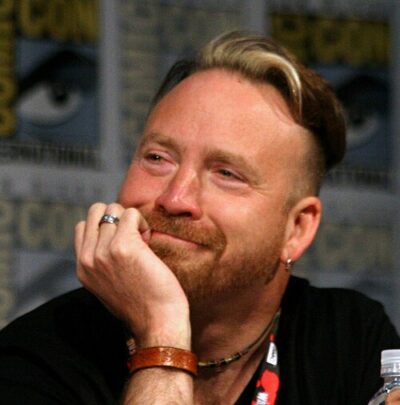
Trevor Devall
Trevor Devall is a Canadian actor. Born November 10, 1972, in Edmonton. Educated at University of Alberta.
Facts
11 facts · 1 confirmed by two sources · 1 cited · 9 from one source
Where this comes from
Papalocal keeps its own record. It started from these sources; what each one said is kept here as it was copied, so a change on their side never changes this page by itself. Tap one to read its version.
What Wikidata says · copied November 16, 2026 · revision 2546604957
- Described as
- Canadian actor
- Other names
- Trevor Deval, Trevor S. Devall, Trevor Stephen Devall, Trevor Stephen Deval
- Born
- November 10, 1972
- Born in
- Edmonton
- Name at birth
- Trevor Stephen Devall
- Citizen of
- Canada; United States · 1 reference
- Occupation
- voice actor; podcaster
- Education
- University of Alberta
- Instrument
- voice
- Lived in
- Los Angeles
- Website
- http://www.trevordevall.com/
- Wikipedias with a page
- 24
Wikidata item Q4120022 (wikidata.org/wiki/Q4120022), public domain (CC0). Copied November 16, 2026.
What Wikipedia says · copied November 16, 2026 · revision 1385359403
Trevor Devall (born November 10, 1972) is a Canadian voice actor and podcaster. He worked for various studios in Vancouver, British Columbia, Canada for years, before he relocated to Los Angeles, California, United States in 2013. Between 2007 and 2013, he produced the podcast Voiceprint with Trevor Devall and Guests, where he interviewed other voice actors. Starting in 2019, he became more active in the tabletop role-playing games community, starting the actual play YouTube show Me, Myself and Die! where he played solo tabletop role-playing games; as well as launching a Kickstarter campaign for his own tabletop role-playing game system The Broken Empires in 2024.
- Born, in its opening lines
- November 10, 1972
From the Wikipedia article “Trevor Devall” (en.wikipedia.org/wiki/Trevor_Devall), by its contributors, under CC BY-SA 4.0 (creativecommons.org/licenses/by-sa/4.0/). Copied November 16, 2026; not changed.
Confirmed Two sources agree. Cited One source, and it names where it got it. One source One source, without a reference of its own. Sources disagree The sources disagree. We show the best-supported value and keep theirs below.
