
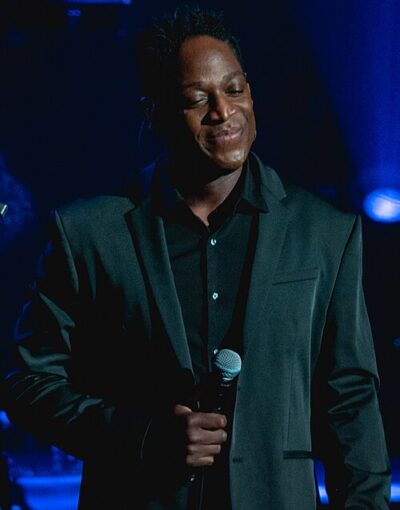
Trey Lorenz is an American singer. Born January 19, 1969, in Florence. Educated at Wilson High School.
Facts
11 facts · 1 confirmed by two sources · 1 cited · 9 from one source
Where this comes from
Papalocal keeps its own record. It started from these sources; what each one said is kept here as it was copied, so a change on their side never changes this page by itself. Tap one to read its version.
What Wikidata says · copied November 19, 2026 · revision 2563859247
- Described as
- American singer
- Born
- January 19, 1969
- Born in
- Florence
- Citizen of
- United States
- Occupation
- singer; musician · 1 reference; songwriter
- Education
- Wilson High School · 1 reference
- Genre
- contemporary R&B
- Instrument
- voice
- Record label
- Monarc Entertainment
- Website
- http://www.trey-lorenz.com · 1 reference
- Wikipedias with a page
- 11
Wikidata item Q1862213 (wikidata.org/wiki/Q1862213), public domain (CC0). Copied November 19, 2026.
What Wikipedia says · copied November 19, 2026 · revision 1370440140
Trey Lorenz (born Lloyd Lorenz Smith; January 19, 1969) is an American R&B singer-songwriter and record producer. He was born in Florence, South Carolina and is a graduate of Wilson High School. Lorenz is best known for his duet with recording artist Mariah Carey on "I'll Be There", a cover of the 1970 number-one Jackson 5 recording of the same name. The record topped the US Billboard Hot 100 and R&B singles chart a second time in 1992 and earned Lorenz and Carey both a Grammy Award nomination for Best R&B Performance by a Duo or Group with Vocals. They would later perform the song again at the funeral of Michael Jackson on July 7, 2009. He is also known for his 1992 hit single "Someone to Hold".
- Born, in its opening lines
- January 19, 1969
From the Wikipedia article “Trey Lorenz” (en.wikipedia.org/wiki/Trey_Lorenz), by its contributors, under CC BY-SA 4.0 (creativecommons.org/licenses/by-sa/4.0/). Copied November 19, 2026; not changed.
Confirmed Two sources agree. Cited One source, and it names where it got it. One source One source, without a reference of its own. Sources disagree The sources disagree. We show the best-supported value and keep theirs below.
