
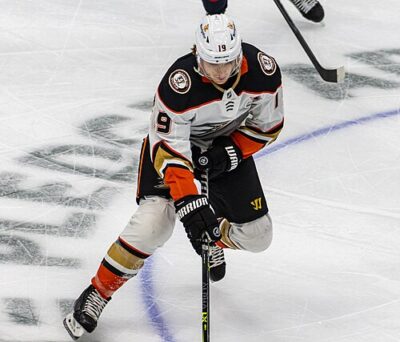
Troy Terry is an American ice hockey forward. Born September 10, 1997, in Denver. Teams include Anaheim Ducks and Denver Pioneers men's ice hockey. Educated at University of Denver and Pioneer High School.
Facts
10 facts · 1 confirmed by two sources · 2 cited · 7 from one source
Where this comes from
Papalocal keeps its own record. It started from these sources; what each one said is kept here as it was copied, so a change on their side never changes this page by itself. Tap one to read its version.
What Wikidata says · copied November 18, 2026 · revision 2565094269
- Described as
- American ice hockey forward
- Other names
- Troy Nathan Terry
- Born
- September 10, 1997
- Born in
- Denver
- Citizen of
- United States
- Occupation
- ice hockey player · 1 reference
- Education
- University of Denver; Pioneer High School
- Teams
- Anaheim Ducks; Denver Pioneers men's ice hockey · 1 reference
- Sport
- ice hockey · 1 reference
- Height
- 1.85 m (6 ft 1 in) · 1 reference
- Wikipedias with a page
- 17
Wikidata item Q21600096 (wikidata.org/wiki/Q21600096), public domain (CC0). Copied November 18, 2026.
What Wikipedia says · copied November 18, 2026 · revision 1376200910
Troy Nathan Terry (born September 10, 1997) is an American professional ice hockey player who is a right winger and alternate captain for the Anaheim Ducks of the National Hockey League (NHL). Terry was drafted by the Ducks at the 2015 NHL entry draft, in the fifth round, 148th overall.
A native of Denver, Terry played with the Colorado Thunderbirds under-16 team at the Tier 1 Elite Hockey League from 2008 until 2014. He eventually left the Thunderbirds to play in the United States Hockey League (USHL) with the USA Hockey National Team Development Program (NTDP).
- Born, in its opening lines
- September 10, 1997
From the Wikipedia article “Troy Terry” (en.wikipedia.org/wiki/Troy_Terry), by its contributors, under CC BY-SA 4.0 (creativecommons.org/licenses/by-sa/4.0/). Copied November 18, 2026; not changed.
Confirmed Two sources agree. Cited One source, and it names where it got it. One source One source, without a reference of its own. Sources disagree The sources disagree. We show the best-supported value and keep theirs below.
