
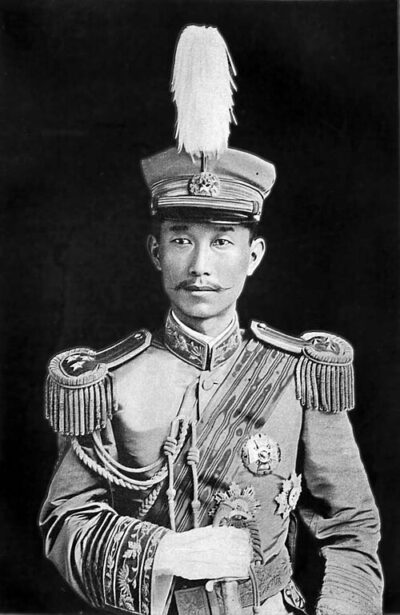
Tsai E
Tsai E was a Chinese politician. Born December 18, 1882, in Shaoyang County. Died November 8, 1916, in Fukuoka. Educated at Imperial Japanese Army Academy.
Facts
14 facts · 2 confirmed by two sources · 2 cited · 10 from one source
What’s different
- Born: we show December 18, 1882 (Confirmed). Wikidata also lists December 19, 1882
Where this comes from
Papalocal keeps its own record. It started from these sources; what each one said is kept here as it was copied, so a change on their side never changes this page by itself. Tap one to read its version.
What Wikidata says · copied November 17, 2026 · revision 2567565189
- Described as
- Chinese politician (1882-1916)
- Other names
- Ts'ai O, Songpo
- Born
- December 18, 1882 · 1 reference; December 19, 1882 · 1 reference
- Died
- November 8, 1916 · 3 references
- Born in
- Shaoyang County
- Died in
- Fukuoka
- Buried in
- Tomb of Cai E
- Cause of death
- tuberculosis
- Name at birth
- 蔡艮寅
- Citizen of
- China; Republic of China · 1 reference
- Occupation
- politician · 1 reference
- Political party
- Tongmenghui
- Education
- Imperial Japanese Army Academy
- Military branch
- New Army · 1 reference
- Military rank
- general
- Wikipedias with a page
- 24
Wikidata item Q702808 (wikidata.org/wiki/Q702808), public domain (CC0). Copied November 17, 2026.
What Wikipedia says · copied November 17, 2026 · revision 1386293944
Cai E (simplified Chinese: 蔡锷; traditional Chinese: 蔡鍔; pinyin: Cài È; Wade–Giles: Ts'ai⁴ O⁴; 18 December 1882 – 8 November 1916), also romanised as Tsai Ao, born Cai Genyin (Chinese: 蔡艮寅; pinyin: Cài Gěnyín), courtesy name Songpo (Chinese: 松坡; pinyin: Sōngpō), was a Chinese revolutionary leader and general. He led the National Protection War against Yuan Shikai's attempt to restore the monarchy.
- Born, in its opening lines
- December 18, 1882
- Died, in its opening lines
- November 8, 1916
From the Wikipedia article “Cai E” (en.wikipedia.org/wiki/Cai_E), by its contributors, under CC BY-SA 4.0 (creativecommons.org/licenses/by-sa/4.0/). Copied November 17, 2026; not changed.
Confirmed Two sources agree. Cited One source, and it names where it got it. One source One source, without a reference of its own. Sources disagree The sources disagree. We show the best-supported value and keep theirs below.
