
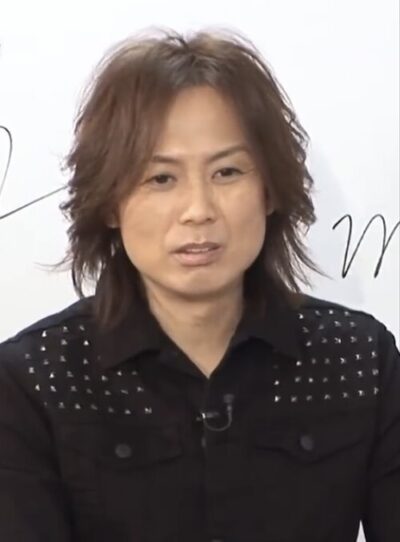
Tsunku
Tsunku is a Japanese musician and record producer. Born October 29, 1968, in Higashiōsaka-shi. Known for Love (Destiny) and Ki ga Tsukeba Anata. Educated at Kindai University.
Facts
23 facts · 1 confirmed by two sources · 2 cited · 20 from one source
Where this comes from
Papalocal keeps its own record. It started from these sources; what each one said is kept here as it was copied, so a change on their side never changes this page by itself. Tap one to read its version.
What Wikidata says · copied November 18, 2026 · revision 2561894328
- Described as
- Japanese musician and record producer
- Other names
- Mitsuo Terada, Tsunku♂
- Born
- October 29, 1968
- Born in
- Higashiōsaka-shi
- Citizen of
- Japan
- Occupation
- guitarist; singer-songwriter; record producer · 1 reference; actor; tarento
- Education
- Kindai University
- Member of
- Sharam Q
- Genre
- J-pop; synth-pop; electronica; video game music; disco; funk rock
- Record label
- Piccolo Town; hachama; Zetima
- Known for
- Love (Destiny); Ki ga Tsukeba Anata
- Height
- 1.70 m (5 ft 7 in) (2002) · 1 reference
- Website
- http://www.tsunku.net
- Wikipedias with a page
- 23
Wikidata item Q1155641 (wikidata.org/wiki/Q1155641), public domain (CC0). Copied November 18, 2026.
What Wikipedia says · copied November 18, 2026 · revision 1378848181
Mitsuo Terada (寺田 光男, Terada Mitsuo; born October 29, 1968), known professionally as Tsunku (つんく♂), is a Japanese singer, record producer, and songwriter. He was the lead singer of the rock band Sharam Q.
As a songwriter, Tsunku is the primary producer for Morning Musume and other Hello! Project acts, such as Coconuts Musume, Berryz Kobo, Cute, V-u-den, Aya Matsuura, and Maki Goto. He has also produced music for artists such as EE Jump and Sonim. Aside from musical acts, Tsunku has also produced soundtracks for anime and video game series such as Rhythm Heaven and ClassicaLoid. The total sales of the singles he has written exceed 37.9 million copies, making him the fifth best-selling lyricist in Japan.
- Born, in its opening lines
- October 29, 1968
From the Wikipedia article “Tsunku” (en.wikipedia.org/wiki/Tsunku), by its contributors, under CC BY-SA 4.0 (creativecommons.org/licenses/by-sa/4.0/). Copied November 18, 2026; not changed.
Confirmed Two sources agree. Cited One source, and it names where it got it. One source One source, without a reference of its own. Sources disagree The sources disagree. We show the best-supported value and keep theirs below.
