
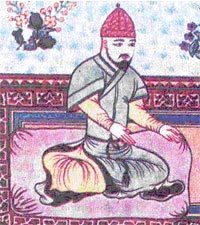
Tughril I
Tughril I was a Founder of the Seljuk Empire. Born 990. Died September 4, 1063, in Tajrish. Positions held include Sultan of the Seljuq Empire (1037–1063).
Facts
14 facts · 0 confirmed by two sources · 0 cited · 12 from one source · 2 where the sources disagree
What’s different
- Born: we show 990 (Sources disagree). Wikidata also lists 995
- Died: we show September 4, 1063 (Sources disagree). Wikidata also lists 1063
Where this comes from
Papalocal keeps its own record. It started from these sources; what each one said is kept here as it was copied, so a change on their side never changes this page by itself. Tap one to read its version.
What Wikidata says · copied November 16, 2026 · revision 2558259687
- Described as
- Founder of the Seljuk Empire (1037–1063)
- Other names
- Rukn ad-Dunya wa ad-Din Abu Talib Muhammad Toghrul-Beg ibn Mikail, Tugrul
- Born
- 990 · 2 references; 995 · 1 reference
- Died
- September 4, 1063 · 1 reference; 1063 · 1 reference
- Died in
- Tajrish
- Citizen of
- Seljuk Empire
- Occupation
- military leader
- Positions held
- Sultan of the Seljuq Empire (1037–1063)
- Spouse
- Fulana Khatun; Altun Jan Khatun; Seyyidah Khatun; Akça Hatun
- Father
- Mikail of Kınık tribe
- Mother
- daughter of Inal Kut Chor
- Siblings
- Chaghri Beg · 1 reference
- Religion
- Sunni Islam
- Wikipedias with a page
- 54
Wikidata item Q144565 (wikidata.org/wiki/Q144565), public domain (CC0). Copied November 16, 2026.
What Wikipedia says · copied November 16, 2026 · revision 1384075200
Muhammad Tughril ibn Mika'il (Persian: ابوطالبْ محمد طغرل بن میکائیل), better known as Tughril (طغرل / طغریل; also spelled Toghril / Tughrul), was a Turkoman chieftain, who founded the Seljuk Empire, ruling from 1037 to 1063.
Tughril united many Turkoman warriors of the Central Asian steppes into a confederacy of tribes and led them in conquest of Khorasan and eastern Persia. He would later establish the Seljuk Sultanate after conquering Persia and taking the Abbasid capital of Baghdad from the Buyids in 1055. Tughril relegated the Abbasid Caliphs to state figureheads and took command of the caliphate's armies in military offensives against the Byzantine Empire and the Fatimids in an effort to expand his empire's borders and unite the Islamic world.
After the deaths of Seljuk leaders such as Israil and Mikail, the Seljuks submitted to the authority of Tughril Bey and began expanding their territories under the leadership of his brother, Chaghri Beg. In 1037, Tughril was declared sultan by the prominent figures of the Seljuk dynasty, and a sermon (khutbah) was delivered in his name. Following the death of Mahmud of Ghazni and the accession of Sultan Masʽud, the Seljuks, under Tughril’s leadership, engaged in several phases of warfare with the Ghaznavids. As a result, the Seljuks emerged as a new power in the Middle East after their decisive victory in the Battle of Dandanqan in 1040, which brought an end to Ghaznavid rule in Greater Khorasan and surrounding regions. Subsequently, Tughril settled in Nishapur as his capital and, with the support of his brother and close allies, established his own state.
Following the Battle of Dandanaqan, Tughril, along with the Seljuk leadership, sent a letter to the Abbasid caliph al-Qa'im bi-Amrillah, requesting an official decree of authority, which was granted. Between the years 1040–1054, with the assistance of Ibrahim Inal, Tughril conquered large parts of Iranian territory, including the regions of Jibal and Iraq-i Ajam, and brought an end to the Buyid government in these areas. He captured the city of Ray, restored it, and declared it the capital. However, after capturing Isfahan, he moved the capital there. Later, Tughril brought Azerbaijan under his control and carried out military campaigns against Byzantium and other regions of Eastern Roman territories, further expanding the Seljuk realm.
In 1055, accepting an invitation from the Abbasid caliph to visit Baghdad, Tughril initiated a new phase in Seljuk–Abbasid relations. Between 1055–1061, he eliminated Buyid rule in Baghdad, captured Malik Rahim, and had sermons read in his name in those territories. After restoring Baghdad, Tughril arranged the marriage of Chaghri Beg’s daughter to the Abbasid caliph, thus strengthening ties with the caliphate. He subsequently seized the Jazira region. Later, after suppressing a revolt by his brother Ibrahim Inal and executing him, Tughril also defeated Arslan al-Basasiri, who had the backing of the Fatimid Caliphate. He married the caliph’s daughter despite opposition from the caliph himself—a union that was accompanied by numerous challenges. Ultimately, in 1063, Tughril died without leaving an heir and left behind a vast empire.
Tughril Beg was known as a devout figure and commissioned the construction of many mosques and madrasas. He was recognized for his adherence to the Hanafi school of Islamic jurisprudence and, with the assistance of his vizier Amid al-Mulk Kunduri, imposed restrictions on the activities of other Islamic sects. While some sources describe him as a just ruler who avoided unnecessary bloodshed, other accounts report oppressive conduct by him and his army.
Tughril’s legacy was the administrative model he created, which was composed of the Turkic political tradition, the region’s customary administrative principles, and the religious legitimacy derived from the Abbasid Caliphate. This model reshaped the institution of sultanate into a form of absolute rule endowed with extraordinary authority. This form of rule overshadowed the worldly power of the caliph, recognizing only his spiritual leadership. Consequently, the caliph was compelled to submit to Tughril’s demands. Before the advent of the Seljuks, Iran was divided between several warring local powers, such as the Buyids, Kakuyids and Ghaznavids. As a result, it suffered from continuous war and destruction. However, under Tughril peace and prosperity were brought to the country and to Mesopotamia, a transition that was further reinforced due to the Seljuks' assimilation to Iranian-Muslim culture.
From the Wikipedia article “Tughril I” (en.wikipedia.org/wiki/Tughril_I), by its contributors, under CC BY-SA 4.0 (creativecommons.org/licenses/by-sa/4.0/). Copied November 16, 2026; not changed.
Confirmed Two sources agree. Cited One source, and it names where it got it. One source One source, without a reference of its own. Sources disagree The sources disagree. We show the best-supported value and keep theirs below.
