
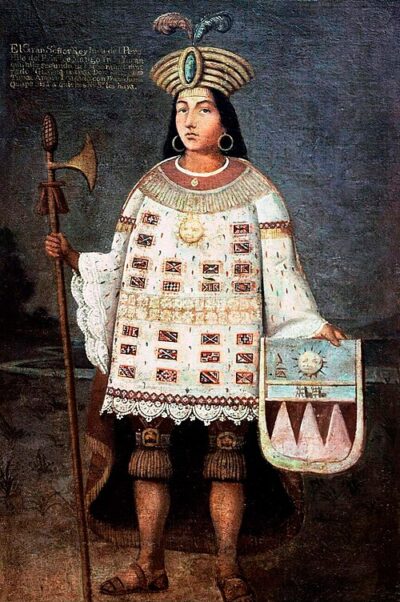
Túpac Amaru
Túpac Amaru was the 4th and last Inca Emperor of the Kingdom of Vilcabamba. Born 1545, in Vilcabamba. Died September 24, 1572, in Cusco.
Facts
10 facts · 2 confirmed by two sources · 1 cited · 7 from one source
Where this comes from
Papalocal keeps its own record. It started from these sources; what each one said is kept here as it was copied, so a change on their side never changes this page by itself. Tap one to read its version.
What Wikidata says · copied November 16, 2026 · revision 2553829490
- Described as
- 4th and last Inca Emperor of the Kingdom of Vilcabamba
- Other names
- Thupa Amaro, Thupaq Amaru, Tupac Amaru, Túpac Amaru I
- Born
- 1545 · 2 references
- Died
- September 24, 1572 · 1 reference
- Born in
- Vilcabamba · 1 reference
- Died in
- Cusco
- Cause of death
- decapitation · 1 reference
- Occupation
- sovereign; Vilcabamba Inca (1570–1572)
- Father
- Manco Inca
- Siblings
- Titu Cusi Yupanqui; Sayri Túpac
- Wikipedias with a page
- 41
Wikidata item Q296269 (wikidata.org/wiki/Q296269), public domain (CC0). Copied November 16, 2026.
What Wikipedia says · copied November 16, 2026 · revision 1382613494
Túpac Amaru or Thupa Amaru (14 April 1545 – 24 September 1572) (first name also spelled Túpac, Tupac, Topa, Tupaq, Thupaq, Thupa, last name also spelled Amaro instead of Amaru) was the last Sapa Inca of the Neo-Inca State, the final remaining independent part of the Inca Empire. He was executed by the Spanish following a months-long pursuit after the fall of the Neo-Inca State.
His name is derived from the Quechua words thupaq, meaning "royal" or "shining" and amaru, which can either mean "snake" or refer to the snake-like being from Andean mythology.
- Born, in its opening lines
- April 14, 1545
- Died, in its opening lines
- September 24, 1572
From the Wikipedia article “Túpac Amaru” (en.wikipedia.org/wiki/Túpac_Amaru), by its contributors, under CC BY-SA 4.0 (creativecommons.org/licenses/by-sa/4.0/). Copied November 16, 2026; not changed.
Confirmed Two sources agree. Cited One source, and it names where it got it. One source One source, without a reference of its own. Sources disagree The sources disagree. We show the best-supported value and keep theirs below.
