
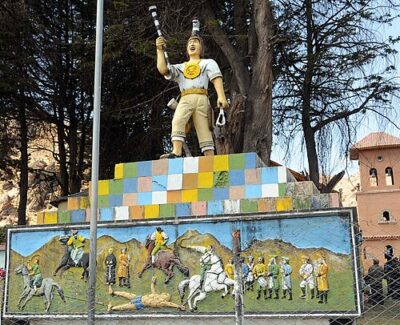
Túpac Katari
Túpac Katari was an indigenous Aymara leader of a major insurrection in colonial-era Upper Peru. Born 1750, in Ayo Ayo. Died November 15, 1781, in La Paz.
Facts
9 facts · 1 confirmed by two sources · 0 cited · 7 from one source · 1 where the sources disagree
What’s different
- Died: we show November 15, 1781 (Sources disagree). Wikipedia says November 13, 1781
Where this comes from
Papalocal keeps its own record. It started from these sources; what each one said is kept here as it was copied, so a change on their side never changes this page by itself. Tap one to read its version.
What Wikidata says · copied November 17, 2026 · revision 2540067118
- Described as
- indigenous Aymara leader of a major insurrection in colonial-era Upper Peru
- Other names
- Túpaj Katari, Katari, Julián Apasa Nina, Julián Apaza, Julián Apasa
- Born
- 1750 · 2 references
- Died
- November 15, 1781
- Born in
- Ayo Ayo
- Died in
- La Paz
- Cause of death
- dismemberment
- Citizen of
- Viceroyalty of Peru
- Occupation
- indigenous leader
- Spouse
- Bartolina Sisa
- Siblings
- Gregoria Apaza
- Wikipedias with a page
- 26
Wikidata item Q468810 (wikidata.org/wiki/Q468810), public domain (CC0). Copied November 17, 2026.
What Wikipedia says · copied November 17, 2026 · revision 1382960588
Túpac Katari or Catari (also Túpaj Katari) (c. 1750 – 13 November 1781), born Julián Apasa Nina, was an indigenous Aymara leader who started a major rebellion in colonial-era Upper Peru (now Bolivia), laying siege to La Paz for six months. His wife Bartolina Sisa and his sister Gregoria Apaza participated in the rebellion by his side. The rebellion was ultimately put down by Spanish loyalists and Katari was executed by quartering.
- Born, in its opening lines
- c. 1750
- Died, in its opening lines
- November 13, 1781
From the Wikipedia article “Túpac Katari” (en.wikipedia.org/wiki/Túpac_Katari), by its contributors, under CC BY-SA 4.0 (creativecommons.org/licenses/by-sa/4.0/). Copied November 17, 2026; not changed.
Confirmed Two sources agree. Cited One source, and it names where it got it. One source One source, without a reference of its own. Sources disagree The sources disagree. We show the best-supported value and keep theirs below.
