
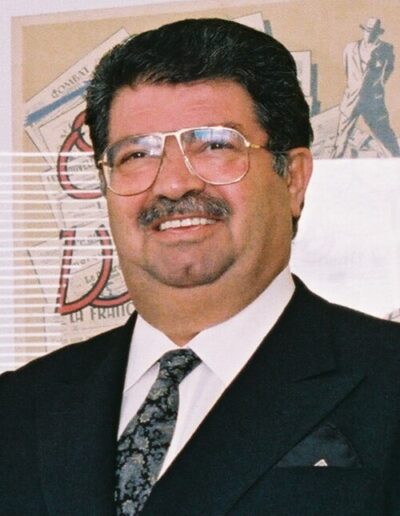
Turgut Özal
Turgut Özal was the 8th President of the Republic of Turkey. Born October 13, 1927, in Malatya. Died April 17, 1993, in Hacettepe Adult Hospital. Positions held include Prime Minister of Turkey (1983–1989), President of Turkey (1989–1993) and Deputy Prime Minister of Turkey (1980–1982). Educated at Istanbul Technical University. Awards include Honorary Companion of the Order of Australia, Order of Australia and honorary doctor of Baku State University.
Facts
28 facts · 2 confirmed by two sources · 8 cited · 18 from one source
Where this comes from
Papalocal keeps its own record. It started from these sources; what each one said is kept here as it was copied, so a change on their side never changes this page by itself. Tap one to read its version.
What Wikidata says · copied November 16, 2026 · revision 2567300050
- Described as
- 8th President of the Republic of Turkey (1927–1993)
- Other names
- Özal, Halil Turgut Özal
- Born
- October 13, 1927 · 5 references
- Died
- April 17, 1993 · 6 references
- Born in
- Malatya · 1 reference
- Died in
- Hacettepe Adult Hospital · 1 reference
- Buried in
- Mausoleum of Turgut Özal
- Cause of death
- myocardial infarction
- Name at birth
- Halil Turgut Özal · 1 reference
- Citizen of
- Turkey
- Occupation
- politician · 1 reference; engineer
- Positions held
- Prime Minister of Turkey (1983–1989) · 1 reference; President of Turkey (1989–1993); Deputy Prime Minister of Turkey (1980–1982); member of the Grand National Assembly of Turkey; president · 1 reference
- Political party
- Motherland Party (1983–1989); National Salvation Party (1977–1980)
- Education
- Istanbul Technical University (1950–)
- Awards
- Honorary Companion of the Order of Australia (1991) · 1 reference; Order of Australia · 1 reference; honorary doctor of Baku State University
- Spouse
- Semra Özal (1954–1993) · 1 reference
- Children
- Ahmet Özal
- Siblings
- Korkut Özal; Yusuf Bozkurt Özal
- Religion
- Islam; Sunni Islam
- Lived in
- Malatya
- Wikipedias with a page
- 83
Wikidata item Q180280 (wikidata.org/wiki/Q180280), public domain (CC0). Copied November 16, 2026.
What Wikipedia says · copied November 16, 2026 · revision 1378219236
Halil Turgut Özal (13 October 1927 – 17 April 1993) was a Turkish politician, bureaucrat, engineer and statesman who served as the president of Turkey from 1989 to 1993. He previously served as the prime minister of Turkey from 1983 to 1989 as the leader of the Motherland Party. He was the deputy prime minister of Turkey in the military government of Bülend Ulusu between 1980 and 1982.
After working briefly at the World Bank in the United States and as a university lecturer, Özal became the general secretary and later the leader of the main miners' trade union of Turkey in 1979, serving as a chief negotiator during large-scale industrial action in 1977. He unsuccessfully stood for Parliament in the 1977 general election as a National Salvation Party (MSP) candidate from İzmir. In 1979, he became an undersecretary to Prime Minister Süleyman Demirel's minority government until the 1980 military coup. As an undersecretary, he played a major role in developing economic reforms, known as the 24 January decisions, which paved the way for greater neoliberalism in the Turkish economy. After the coup, he was appointed Deputy Prime Minister of Turkey responsible for the economy in Bülend Ulusu's government and continued to implement economic reforms. He resigned in 1982 following disagreements over economic policy.
Özal formed the Motherland Party (ANAP) in 1983 after the ban on political parties was lifted by the military government. ANAP won a parliamentary majority in the 1983 general election and Özal subsequently became the prime minister of Turkey. While implementing several economic reforms concerning the exchange rate and deregulation, a rise in inflation and the growing conflict with Kurdish separatists led to ANAP winning reduced pluralities in the 1984 local elections. Despite a referendum in 1987 allowing politicians banned during the 1980 coup to resume political activities, ANAP was re-elected with a parliamentary majority in the 1987 general election, albeit with a reduced share of the vote. He survived an assassination attempt during a party congress in 1988. Özal's foreign policy focused on averting war with Greece following the Şimşek Incident and temporarily allowed Bulgarian Turks to emigrate to Turkey.
Özal was elected President of the Turkish Republic in the 1989 presidential election, while Yıldırım Akbulut replaced him as Prime Minister. Despite assuming a ceremonial role with minimal political duties, Özal remained occupied with government activities, such as intervening in the 1990 Zonguldak miners' strikes. While Akbulut took a docile approach as Prime Minister, disputes over the President's and Prime Minister's duties were dominant when Süleyman Demirel became Prime Minister after the 1991 general election. The Southeastern Anatolia development project began with the construction of the Atatürk Dam in Şanlıurfa, while Özal participated in the first ever summit of Turkic Republics in 1992 held in Ankara. He maintained close relations with the president of the United States George H. W. Bush during the Gulf War and the end of the Cold War. Özal died unexpectedly while in office in 1993, with an exhumation in 2012 leading to evidence of poisoning but the cause of death was unclear.
- Born, in its opening lines
- October 13, 1927
- Died, in its opening lines
- April 17, 1993
From the Wikipedia article “Turgut Özal” (en.wikipedia.org/wiki/Turgut_Özal), by its contributors, under CC BY-SA 4.0 (creativecommons.org/licenses/by-sa/4.0/). Copied November 16, 2026; not changed.
Confirmed Two sources agree. Cited One source, and it names where it got it. One source One source, without a reference of its own. Sources disagree The sources disagree. We show the best-supported value and keep theirs below.
