
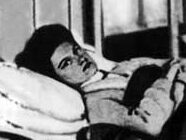
Typhoid Mary
Typhoid Mary was an infected houseworker in New York City. Born September 23, 1869, in Cookstown. Died November 11, 1938, in North Brother Island.
Facts
14 facts · 2 confirmed by two sources · 1 cited · 11 from one source
Where this comes from
Papalocal keeps its own record. It started from these sources; what each one said is kept here as it was copied, so a change on their side never changes this page by itself. Tap one to read its version.
What Wikidata says · copied November 13, 2026 · revision 2568324000
- Described as
- infected houseworker in New York City
- Other names
- Mary Brown, Mary Mallon
- Born
- September 23, 1869 · 1 reference
- Died
- November 11, 1938 · 1 reference
- Born in
- Cookstown
- Died in
- North Brother Island
- Buried in
- Saint Raymond's Cemetery
- Cause of death
- pneumonia
- Citizen of
- United Kingdom of Great Britain and Ireland; United States
- Occupation
- cook · 1 reference
- Lived in
- Mamaroneck (1897–2025); North Brother Island (2 times) (1907–1938); Tuxedo Park (1906); Oyster Bay (1906); Sands Point (1904)
- Wikipedias with a page
- 46
Wikidata item Q238948 (wikidata.org/wiki/Q238948), public domain (CC0). Copied November 13, 2026.
What Wikipedia says · copied November 13, 2026 · revision 1384892807
Mary Mallon (September 23, 1869 – November 11, 1938), commonly known as Typhoid Mary, was an Irish-born cook who lived in the United States from a young age and is believed to have infected up to fifty-seven people with the bacteria that cause typhoid fever. The infections caused three confirmed deaths. She was the first person in the U.S. to be identified as an asymptomatic carrier of Salmonella typhi bacteria.
Between 1897 and 1907, Mallon worked at the houses of several New York–based families; members of four of the households contracted typhoid. An investigation by George Soper, an epidemiologist at the New York Department of Health, identified Mallon as the potential disease vector. In 1907, she was forcibly quarantined at the Riverside Hospital, an institution for those with quarantinable diseases, on North Brother Island in New York City's East River. She was released in 1910 after she swore to report to the health department every quarter and not return to cooking as a career.
A further typhoid outbreak at the Sloane Maternity Hospital in early 1915 resulted in twenty-five cases and two deaths. Mallon was identified as the responsible party and was returned to North Brother Island. She remained there until her death in 1938. Her nickname, coined by officials at the health department, became a colloquial term for anyone who spreads disease.
Mallon's case raises ethical questions about the balance between protection of individual liberty and the requirements of public health. She was treated differently from the four hundred other asymptomatic typhoid carriers identified during her confinement. Others who worked in the food industry were given jobs and had their rents paid for by the state, and none were confined for the same length of time as she was. Her story has been reexamined and reevaluated, particularly during outbreaks of HIV/AIDS, tuberculosis, and COVID-19.
- Born, in its opening lines
- September 23, 1869
- Died, in its opening lines
- November 11, 1938
From the Wikipedia article “Mary Mallon” (en.wikipedia.org/wiki/Mary_Mallon), by its contributors, under CC BY-SA 4.0 (creativecommons.org/licenses/by-sa/4.0/). Copied November 13, 2026; not changed.
Confirmed Two sources agree. Cited One source, and it names where it got it. One source One source, without a reference of its own. Sources disagree The sources disagree. We show the best-supported value and keep theirs below.
