
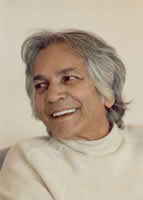
U. G. Krishnamurti
U. G. Krishnamurti was an Indian philosopher. Born July 9, 1918, in Machilipatnam. Died March 22, 2007, in Vallecrosia al mare. Educated at University of Madras.
Facts
10 facts · 2 confirmed by two sources · 1 cited · 7 from one source
Where this comes from
Papalocal keeps its own record. It started from these sources; what each one said is kept here as it was copied, so a change on their side never changes this page by itself. Tap one to read its version.
What Wikidata says · copied November 18, 2026 · revision 2567390211
- Described as
- Indian philosopher (1918–2007)
- Other names
- Uppaluri Gopala Krishnamurti
- Born
- July 9, 1918 · 1 reference
- Died
- March 22, 2007 · 2 references
- Born in
- Machilipatnam · 1 reference
- Died in
- Vallecrosia al mare
- Citizen of
- India (1950–); British Raj (–1947); Dominion of India (1947–1950)
- Occupation
- philosopher · 1 reference; writer · 1 reference
- Education
- University of Madras
- Wikipedias with a page
- 20
Wikidata item Q423541 (wikidata.org/wiki/Q423541), public domain (CC0). Copied November 18, 2026.
What Wikipedia says · copied November 18, 2026 · revision 1383137217
Uppaluri Gopala Krishnamurti (9 July 1918 – 22 March 2007) was an Indian "anti-guru" who questioned the search for enlightenment. Having pursued a religious path in his youth and eventually rejecting it, U.G. clarified that he had experienced a devastating biological transformation on his 49th birthday, an event he referred to as "the calamity". He emphasized that this transformation back to "the natural state" is a rare, acausal, biological occurrence with no religious context. Because of this, he discouraged people from pursuing the "natural state" as a spiritual goal.
He rejected the basis of thought and in doing so negated all systems of thought and knowledge. Hence he explained his assertions were experiential and not speculative – "Tell them that there is nothing to understand."
He was unrelated to his contemporary Jiddu Krishnamurti, although the two men had a number of meetings because of their association with the Theosophical Society and U.G. has, at times, referred to him as "[his] teacher" in spite of having ultimately rejected his teachings as well as the idea that anything could or should be taught in any spiritual context.
- Born, in its opening lines
- July 9, 1918
- Died, in its opening lines
- March 22, 2007
From the Wikipedia article “U. G. Krishnamurti” (en.wikipedia.org/wiki/U._G._Krishnamurti), by its contributors, under CC BY-SA 4.0 (creativecommons.org/licenses/by-sa/4.0/). Copied November 18, 2026; not changed.
Confirmed Two sources agree. Cited One source, and it names where it got it. One source One source, without a reference of its own. Sources disagree The sources disagree. We show the best-supported value and keep theirs below.
