
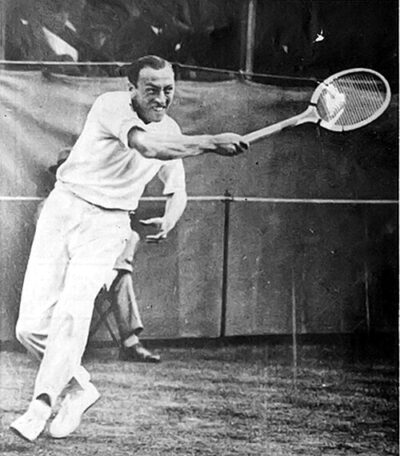
Uberto de Morpurgo
Uberto de Morpurgo was an Italian tennis player. Born January 12, 1896, in Trieste. Died February 26, 1961, in Geneva.
Facts
9 facts · 1 confirmed by two sources · 1 cited · 6 from one source · 1 where the sources disagree
What’s different
- Born: we show January 12, 1896 (Sources disagree). Wikipedia says January 11, 1896
Where this comes from
Papalocal keeps its own record. It started from these sources; what each one said is kept here as it was copied, so a change on their side never changes this page by itself. Tap one to read its version.
What Wikidata says · copied November 18, 2026 · revision 2520160929
- Described as
- Italian tennis player (1896–1961)
- Other names
- Umberto De Morpurgo
- Born
- January 12, 1896 · 3 references
- Died
- February 26, 1961 · 2 references
- Born in
- Trieste
- Died in
- Geneva
- Name at birth
- Hubert Louis de Morpurgo
- Citizen of
- Austria–Hungary (–1918); Italy (1918–)
- Occupation
- tennis player
- Sport
- tennis · 1 reference
- Wikipedias with a page
- 20
Wikidata item Q735977 (wikidata.org/wiki/Q735977), public domain (CC0). Copied November 18, 2026.
What Wikipedia says · copied November 18, 2026 · revision 1353796734
Uberto De Morpurgo (11 January 1896 – 26 February 1961) was an Italian tennis player.
Uberto De Morpurgo was born in Trieste when it was part of Austria, but became an Italian citizen when the city changed after World War I. His world rankings were ninth in 1928, tenth in 1929, and eighth in 1930. Bill Tilden ranked him 10th in the world in 1924, and 6th in 1929.
- Born, in its opening lines
- January 11, 1896
- Died, in its opening lines
- February 26, 1961
From the Wikipedia article “Uberto De Morpurgo” (en.wikipedia.org/wiki/Uberto_De_Morpurgo), by its contributors, under CC BY-SA 4.0 (creativecommons.org/licenses/by-sa/4.0/). Copied November 18, 2026; not changed.
Confirmed Two sources agree. Cited One source, and it names where it got it. One source One source, without a reference of its own. Sources disagree The sources disagree. We show the best-supported value and keep theirs below.
