
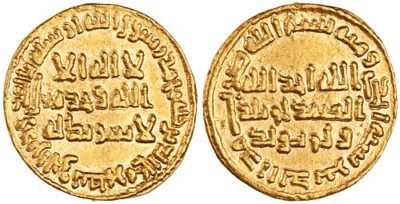
Umar II
Umar II was an Umayyad caliph from 717 to 720. Born November 2, 681, in Medina. Died February 5, 720, in Church of Saint Simeon Stylites. Positions held include Umayyad Caliph (717–720) and Governor of Madina (706–712).
Facts
19 facts · 1 confirmed by two sources · 1 cited · 16 from one source · 1 where the sources disagree
What’s different
- Born: we show November 2, 681 (Sources disagree). Wikipedia says c. 680
Where this comes from
Papalocal keeps its own record. It started from these sources; what each one said is kept here as it was copied, so a change on their side never changes this page by itself. Tap one to read its version.
What Wikidata says · copied November 16, 2026 · revision 2560154435
- Described as
- Umayyad caliph from 717 to 720
- Other names
- Umar ibn Abd al-Aziz, umayyad saint, second umar
- Born
- November 2, 681
- Died
- February 5, 720
- Born in
- Medina · 2 references
- Died in
- Church of Saint Simeon Stylites
- Buried in
- Omar Ibn abdel-Aziz tomb
- Cause of death
- disease
- Occupation
- politician; governor; caliph
- Positions held
- Umayyad Caliph (717–720); Governor of Madina (706–712)
- Spouse
- Fatima bint Abd al-Malik
- Children
- Abdul-Malik ibn Umar ibn Abdul-Aziz; Abd Allah ibn Umar ibn Abd al-Aziz; Abd al-Aziz ibn Umar ibn Abd al-Aziz
- Father
- Abd al-Aziz ibn Marwan
- Mother
- Layla bint Asim
- Siblings
- Umm al-Banin bint Abdul Aziz
- Religion
- Islam
- Wikipedias with a page
- 70
Wikidata item Q298403 (wikidata.org/wiki/Q298403), public domain (CC0). Copied November 16, 2026.
What Wikipedia says · copied November 16, 2026 · revision 1380893881
Umar ibn Abd al-Aziz ibn Marwan (c. 680 – February 720), commonly known as Umar II, was the eighth Umayyad caliph, ruling from 717 until his death in 720. He succeeded his cousin, Sulayman ibn Abd al-Malik.
Umar's brief administration instituted major fiscal changes, notably tax reforms that exempted non-Arab Muslims (mawali) from the jizya to address financial inequality, alongside measures preventing the dynastic privatization of state lands. In addition to these economic policies, his government directed the early official compilation of hadith literature. Burdened by the severe financial strain and heavy casualties of the Siege of Constantinople, Umar ordered the withdrawal of Muslim forces from exposed northern fronts, including Constantinople and Cilicia, to consolidate defenses around the Syrian heartland. Despite a general de-escalation of large-scale offensive campaigns, his administration oversaw the conquest and fortification of Narbonne in Septimania.
Contemporaries widely viewed Umar as the Mahdi, due to his reputation for piety, generosity, asceticism, and a profound sense of justice. Many Muslims regard him as the fifth rightly guided caliph. Standing apart from other Umayyad rulers in historical memory, both early critics and the Abbasids largely spared his memory from the systematic desecration and exhumation applied to the rest of the dynasty.
- Born, in its opening lines
- c. 680
- Died, in its opening lines
- February 720
From the Wikipedia article “Umar ibn Abd al-Aziz” (en.wikipedia.org/wiki/Umar_ibn_Abd_al-Aziz), by its contributors, under CC BY-SA 4.0 (creativecommons.org/licenses/by-sa/4.0/). Copied November 16, 2026; not changed.
Confirmed Two sources agree. Cited One source, and it names where it got it. One source One source, without a reference of its own. Sources disagree The sources disagree. We show the best-supported value and keep theirs below.
