
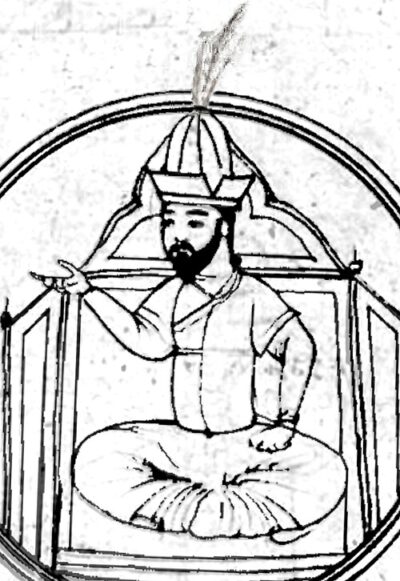
Umar Shaikh
Umar Shaikh was a Timurid prince, son of Timur. Born 1354. Died January 16, 1394, in Tuz Khormato.
Facts
13 facts · 1 confirmed by two sources · 1 cited · 10 from one source · 1 where the sources disagree
What’s different
- Born: we show 1354 (Sources disagree). Wikipedia says 1356
Where this comes from
Papalocal keeps its own record. It started from these sources; what each one said is kept here as it was copied, so a change on their side never changes this page by itself. Tap one to read its version.
What Wikidata says · copied November 18, 2026 · revision 2507601471
- Described as
- Timurid prince, son of Timur
- Other names
- Umar Shaikh Mirza I, Umar Xaikh
- Born
- 1354
- Died
- January 16, 1394
- Died in
- Tuz Khormato
- Buried in
- Shahrisabz
- Spouse
- Malikat Agha · 1 reference
- Children
- Baikara; Iskandar Sultan; Ahmad ibn Umar Xaikh; Rustam Mirza; Pir Muhammad
- Father
- Timur
- Siblings
- Aka Begi
- Religion
- Islam
- Wikipedias with a page
- 20
Wikidata item Q4475316 (wikidata.org/wiki/Q4475316), public domain (CC0). Copied November 18, 2026.
What Wikipedia says · copied November 18, 2026 · revision 1371085753
Mu'iz-ud-din Umar Shaikh Mirza (Persian: عمر شیخ میرزا; 1356 – February 1394) was a member of the Timurid dynasty and a son of its founder, the Central Asian conqueror Timur. Known for being a skilled soldier, Umar Shaikh was one of Timur's military commanders and also served as a regional governor. He died in 1394, predeceasing his father by over a decade.
He was afforded the honorifics Ghiyas al-Din ('succour of the faith') and Shuja' al-Din ('brave one of the faith'), together with the kunya Abu Ahmad ('father of Ahmad'), taken from his son Ahmad.
- Born, in its opening lines
- 1356
- Died, in its opening lines
- February 1394
From the Wikipedia article “Umar Shaikh Mirza I” (en.wikipedia.org/wiki/Umar_Shaikh_Mirza_I), by its contributors, under CC BY-SA 4.0 (creativecommons.org/licenses/by-sa/4.0/). Copied November 18, 2026; not changed.
Confirmed Two sources agree. Cited One source, and it names where it got it. One source One source, without a reference of its own. Sources disagree The sources disagree. We show the best-supported value and keep theirs below.
