
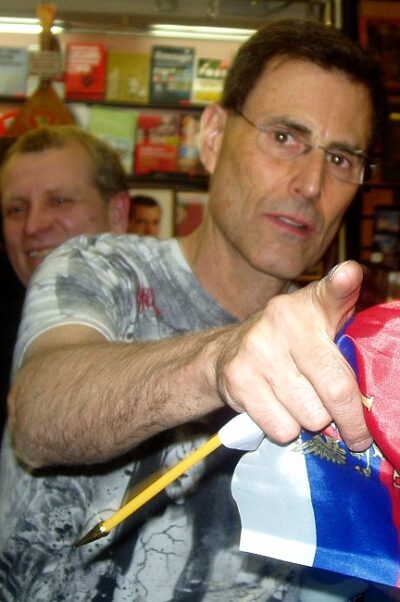
Uri Geller is an Israeli illusionist. Born December 20, 1946, in Ein-Gedi Hospital. Educated at Terra Santa College.
Facts
15 facts · 1 confirmed by two sources · 1 cited · 13 from one source
Where this comes from
Papalocal keeps its own record. It started from these sources; what each one said is kept here as it was copied, so a change on their side never changes this page by itself. Tap one to read its version.
What Wikidata says · copied November 16, 2026 · revision 2569076042
- Described as
- Israeli illusionist
- Other names
- Uri Geller Freud
- Born
- December 20, 1946 · 5 references
- Born in
- Ein-Gedi Hospital
- Citizen of
- United Kingdom · 1 reference; Israel
- Occupation
- psychic; blogger; magician; film actor; illusionist · 1 reference; actor · 1 reference; painter · 1 reference; television presenter · 1 reference
- Education
- Terra Santa College
- Lived in
- Jaffa · 1 reference
- Website
- https://www.urigeller.com
- Wikipedias with a page
- 41
Wikidata item Q44657 (wikidata.org/wiki/Q44657), public domain (CC0). Copied November 16, 2026.
What Wikipedia says · copied November 16, 2026 · revision 1384979944
Uri Geller ( OOR-ee GHEL-ər; Hebrew: אורי גלר; born 20 December 1946) is an Israeli-British illusionist, magician, television personality, and self-proclaimed psychic. He is known for his trademark television performances of spoon bending and other illusions. Geller uses conjuring tricks to simulate the effects of psychokinesis and telepathy. Geller's career as an entertainer has spanned more than four decades, with television shows and appearances in many countries. Several magicians have dismissed Geller’s claims of possessing psychic powers, arguing that his effects can be replicated by others using standard stage magic techniques.
- Born, in its opening lines
- December 20, 1946
From the Wikipedia article “Uri Geller” (en.wikipedia.org/wiki/Uri_Geller), by its contributors, under CC BY-SA 4.0 (creativecommons.org/licenses/by-sa/4.0/). Copied November 16, 2026; not changed.
Confirmed Two sources agree. Cited One source, and it names where it got it. One source One source, without a reference of its own. Sources disagree The sources disagree. We show the best-supported value and keep theirs below.
