
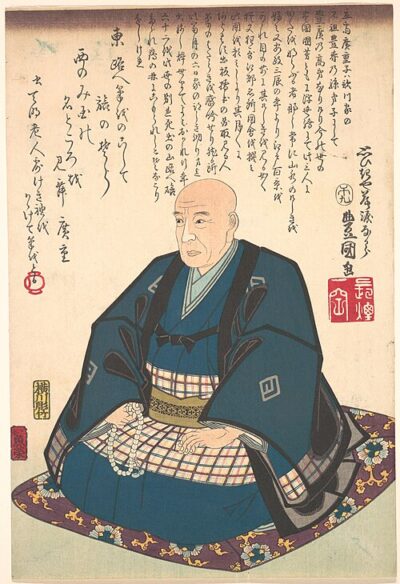
Utagawa Hiroshige
Utagawa Hiroshige was a Japanese ukiyo-e artist. Born 1797, in Edo. Died October 12, 1858, in Edo. Positions held include dōshin (1809–1832). Known for One Hundred Famous Views of Edo, Thirty-six Views of Mount Fuji and Eight Views of Ōmi.
Facts
25 facts · 2 confirmed by two sources · 8 cited · 15 from one source
Where this comes from
Papalocal keeps its own record. It started from these sources; what each one said is kept here as it was copied, so a change on their side never changes this page by itself. Tap one to read its version.
What Wikidata says · copied November 16, 2026 · revision 2565835193
- Described as
- Japanese ukiyo-e artist (1797–1858)
- Other names
- Andō Hiroshige, Ando, Jūemon Andō, Utugawa Hiroshige, Tokutarō, Ichiyūsai, Hiroshige Utagawa, Yūsai, Ichiryūsai Hiroshige, Ichiryūsai, Hiroshige Utakawa, Hiroshige Andō
- Born
- 1797 · 54 references
- Died
- October 12, 1858 · 6 references
- Born in
- Edo · 2 references
- Died in
- Edo · 2 references
- Buried in
- Tōgaku-ji Temple
- Cause of death
- cholera
- Name at birth
- 安藤 徳太郎
- Citizen of
- Japan · 1 reference
- Occupation
- painter · 3 references; ukiyo-e artist · 1 reference; xylographer · 1 reference; draftsperson · 1 reference; artist · 1 reference
- Positions held
- dōshin (1809–1832)
- Genre
- landscape painting · 1 reference; ukiyo-e · 1 reference
- Known for
- One Hundred Famous Views of Edo; Thirty-six Views of Mount Fuji; Eight Views of Ōmi; Kōshū Nikki; The Sixty-nine Stations of the Kiso Kaidō; Famous Views of the Sixty-odd Provinces; Tendō Hiroshige
- Field
- ukiyo-e · 1 reference; shunga · 1 reference
- Wikipedias with a page
- 69
Wikidata item Q200798 (wikidata.org/wiki/Q200798), public domain (CC0). Copied November 16, 2026.
What Wikipedia says · copied November 16, 2026 · revision 1381199470
Utagawa Hiroshige (歌川 広重) or Andō Hiroshige (安藤 広重), born Andō Tokutarō (安藤 徳太郎; 1797 – 12 October 1858), was a Japanese ukiyo-e artist, considered the last great master of that tradition.
Hiroshige is best known for his horizontal-format landscape series The Fifty-three Stations of the Tōkaidō and for his vertical-format landscape series One Hundred Famous Views of Edo. The subjects of his work were atypical of the ukiyo-e genre, whose typical focus was on beautiful women, popular actors, and other scenes of the urban pleasure districts of Japan's Edo period (1603–1868). The popular series Thirty-six Views of Mount Fuji by Hokusai was a strong influence on Hiroshige's choice of subject, though Hiroshige's approach was more poetic and ambient than Hokusai's bolder, more formal prints. Subtle use of color was essential in Hiroshige's prints, often printed with multiple impressions in the same area and with extensive use of bokashi (color gradation), both of which were rather labor-intensive techniques.
For scholars and collectors, Hiroshige's death marked the beginning of a rapid decline in the ukiyo-e genre, especially in the face of the westernization that followed the Meiji Restoration of 1868. Hiroshige's work came to have a marked influence on western European painting towards the close of the 19th century as a part of the trend in Japonism. Western European artists, such as Manet and Monet, collected and closely studied Hiroshige's compositions: Vincent van Gogh, for instance, painted copies of some Hiroshige prints.
- Born, in its opening lines
- 1797
- Died, in its opening lines
- October 12, 1858
From the Wikipedia article “Hiroshige” (en.wikipedia.org/wiki/Hiroshige), by its contributors, under CC BY-SA 4.0 (creativecommons.org/licenses/by-sa/4.0/). Copied November 16, 2026; not changed.
Confirmed Two sources agree. Cited One source, and it names where it got it. One source One source, without a reference of its own. Sources disagree The sources disagree. We show the best-supported value and keep theirs below.
