
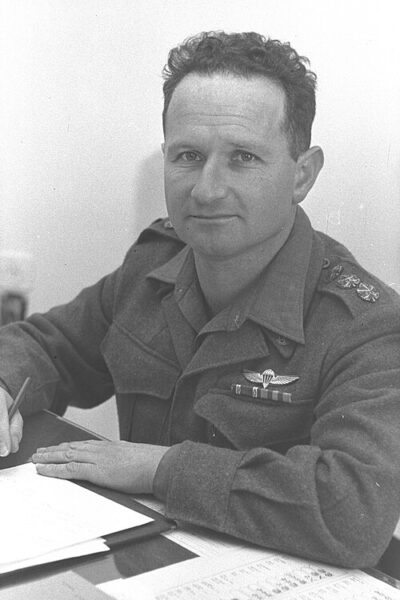
Uzi Narkiss
Uzi Narkiss was an Israeli general. Born January 6, 1925, in Jerusalem. Died December 17, 1997, in Jerusalem. Educated at Gymnasia Rehavia and École de guerre. Awards include Legion of Honour.
Facts
15 facts · 2 confirmed by two sources · 2 cited · 11 from one source
Where this comes from
Papalocal keeps its own record. It started from these sources; what each one said is kept here as it was copied, so a change on their side never changes this page by itself. Tap one to read its version.
What Wikidata says · copied November 18, 2026 · revision 2567300430
- Described as
- Israeli general (1925–1997)
- Born
- January 6, 1925 · 2 references
- Died
- December 17, 1997 · 2 references
- Born in
- Jerusalem · 1 reference
- Died in
- Jerusalem · 1 reference
- Buried in
- Mount Herzl
- Citizen of
- Israel
- Occupation
- military personnel; politician · 1 reference; military officer
- Education
- Gymnasia Rehavia; École de guerre
- Awards
- Legion of Honour
- Spouse
- Ester Narkis
- Military branch
- Haganah
- Military rank
- aluf
- Wikipedias with a page
- 23
Wikidata item Q448886 (wikidata.org/wiki/Q448886), public domain (CC0). Copied November 18, 2026.
What Wikipedia says · copied November 18, 2026 · revision 1354690301
Uzi Narkiss (Hebrew: עוזי נרקיס; January 6, 1925 – December 17, 1997) was an Israeli general. Narkiss was commander of the Israel Defense Forces (IDF) units in the Central Region during the 1967 Six-Day War. Narkiss appears in the famous photograph of Defense Minister Moshe Dayan flanked by Chief of Staff Yitzhak Rabin taken in the Old City of Jerusalem shortly after its capture from Jordanian forces.
- Born, in its opening lines
- January 6, 1925
- Died, in its opening lines
- December 17, 1997
From the Wikipedia article “Uzi Narkiss” (en.wikipedia.org/wiki/Uzi_Narkiss), by its contributors, under CC BY-SA 4.0 (creativecommons.org/licenses/by-sa/4.0/). Copied November 18, 2026; not changed.
Confirmed Two sources agree. Cited One source, and it names where it got it. One source One source, without a reference of its own. Sources disagree The sources disagree. We show the best-supported value and keep theirs below.
