
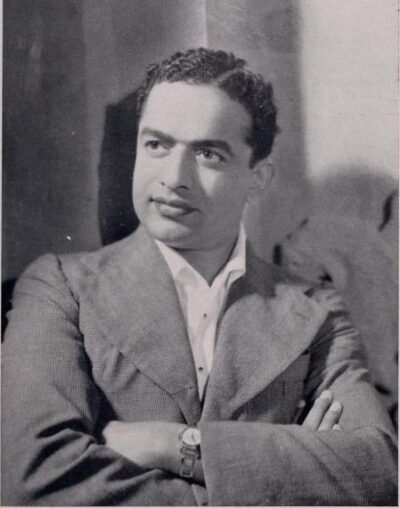
V. Shantaram
V. Shantaram was an Indian film director and actor. Born November 18, 1901, in Kolhapur State. Died October 30, 1990, in Mumbai. Educated at Private High School Kolhapur. Awards include Filmfare Award for Best Director, Dadasaheb Phalke Award and Padma Vibhushan.
Facts
25 facts · 2 confirmed by two sources · 8 cited · 15 from one source
Where this comes from
Papalocal keeps its own record. It started from these sources; what each one said is kept here as it was copied, so a change on their side never changes this page by itself. Tap one to read its version.
What Wikidata says · copied November 18, 2026 · revision 2564401909
- Described as
- Indian film director and actor (1901–1990)
- Other names
- Shantaram Rajaram Vankudre
- Born
- November 18, 1901 · 3 references
- Died
- October 30, 1990 · 3 references
- Born in
- Kolhapur State
- Died in
- Mumbai
- Name at birth
- Shantaram Rajaram Vankudre
- Citizen of
- India (1950–); British Raj (–1947); Dominion of India (1947–1950)
- Occupation
- film director · 1 reference; film producer · 1 reference; screenwriter · 1 reference; film actor · 1 reference; actor · 1 reference; director · 1 reference
- Education
- Private High School Kolhapur
- Awards
- Filmfare Award for Best Director (1957); Dadasaheb Phalke Award; Padma Vibhushan
- Spouse
- Sandhya Shantaram (1956–1990) · 1 reference; Jayashree (1941–1956) · 1 reference; Vimala
- Children
- Kiran Shantaram; Rajshree; Madhura Jasraj; Charusheela Ray
- Wikipedias with a page
- 23
Wikidata item Q1373408 (wikidata.org/wiki/Q1373408), public domain (CC0). Copied November 18, 2026.
What Wikipedia says · copied November 18, 2026 · revision 1383469471
V. Shantaram (born Shantaram Rajaram Vankudre; Marathi: [ʋiː ʃaːn̪t̪aɾaːm]; 18 November 1901 – 30 October 1990), also known as Shantaram Bapu, was an Indian film director, producer, screenwriter, actor and editor known for his work in Hindi and Marathi films. Widely regarded as one of the pioneers of Indian cinema, he was known for his socially conscious films, innovative filmmaking techniques and experimentation with colour, sound and cinematography. He is best known for films such as Dr. Kotnis Ki Amar Kahani (1946), Amar Bhoopali (1951), Jhanak Jhanak Payal Baaje (1955), Do Aankhen Barah Haath (1957), Navrang (1959), Duniya Na Mane (1937), Pinjara (1972), Chaani, Iye Marathiche Nagari and Zunj.
Shantaram began his career as an actor and technician at the Maharashtra Film Company in Kolhapur before co-founding the Prabhat Film Company in 1929 with V. G. Damle, Sheikh Fatelal, K. R. Dhaiber and S. B. Kulkarni. He directed several influential films for Prabhat, including Ayodhyecha Raja (1932), one of the earliest Marathi talkies, and Kunku (1937), which was released in Hindi as Duniya Na Mane. In 1942, he founded Rajkamal Kalamandir, through which he produced and directed several notable films.
Among his best-known works are Sant Tukaram (1936), Manoos (1939), Shejari (1941), Dr. Kotnis Ki Amar Kahani (1946), Jhanak Jhanak Payal Baaje (1955), Do Ankhen Barah Haath (1957), Navrang (1959), Stree (1961) and Pinjara (1972). His films frequently addressed social issues, including caste, gender inequality, rehabilitation and the position of women in society. He received numerous honours for his contribution to Indian cinema, including the Dadasaheb Phalke Award in 1985. He was also awarded the Padma Vibhushan, India's second-highest civilian honour, in 1992, posthumously. He also received many major awards in his career, including five National Film Awards and a Golden Globes.
- Born, in its opening lines
- November 18, 1901
- Died, in its opening lines
- October 30, 1990
From the Wikipedia article “V. Shantaram” (en.wikipedia.org/wiki/V._Shantaram), by its contributors, under CC BY-SA 4.0 (creativecommons.org/licenses/by-sa/4.0/). Copied November 18, 2026; not changed.
Confirmed Two sources agree. Cited One source, and it names where it got it. One source One source, without a reference of its own. Sources disagree The sources disagree. We show the best-supported value and keep theirs below.
