
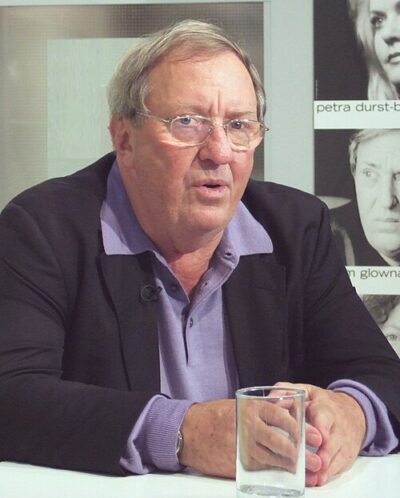
Vadim Glowna
Vadim Glowna was a German actor. Born September 26, 1941, in Eutin. Died January 24, 2012, in Berlin.
Facts
15 facts · 2 confirmed by two sources · 9 cited · 4 from one source
Where this comes from
Papalocal keeps its own record. It started from these sources; what each one said is kept here as it was copied, so a change on their side never changes this page by itself. Tap one to read its version.
What Wikidata says · copied November 18, 2026 · revision 2568976020
- Described as
- German actor (1941-2012)
- Born
- September 26, 1941 · 6 references
- Died
- January 24, 2012 · 6 references
- Born in
- Eutin · 1 reference
- Died in
- Berlin · 1 reference
- Cause of death
- diabetes
- Citizen of
- Germany
- Occupation
- actor · 2 references; film director · 1 reference; screenwriter · 2 references; film actor · 1 reference; stage actor · 1 reference; film producer · 2 references; television actor; director · 1 reference
- Spouse
- Vera Tschechowa · 1 reference
- Wikipedias with a page
- 22
Wikidata item Q66126 (wikidata.org/wiki/Q66126), public domain (CC0). Copied November 18, 2026.
What Wikipedia says · copied November 18, 2026 · revision 1357318301
Vadim Glowna (German pronunciation: [ˈvaːdim ˈɡlɔvna] ; 26 September 1941 – 24 January 2012) was a German actor and film director. Since 1964, he appeared in more than 150 films and television shows.
He directed the 1983 film Dies rigorose Leben, which won an Honourable Mention at the 33rd Berlin International Film Festival. In 1989, he was a member of the jury at the 39th Berlin International Film Festival. Three years later, his film Rising to the Bait was entered into the 42nd Berlin International Film Festival.
- Born, in its opening lines
- September 26, 1941
- Died, in its opening lines
- January 24, 2012
From the Wikipedia article “Vadim Glowna” (en.wikipedia.org/wiki/Vadim_Glowna), by its contributors, under CC BY-SA 4.0 (creativecommons.org/licenses/by-sa/4.0/). Copied November 18, 2026; not changed.
Confirmed Two sources agree. Cited One source, and it names where it got it. One source One source, without a reference of its own. Sources disagree The sources disagree. We show the best-supported value and keep theirs below.
