
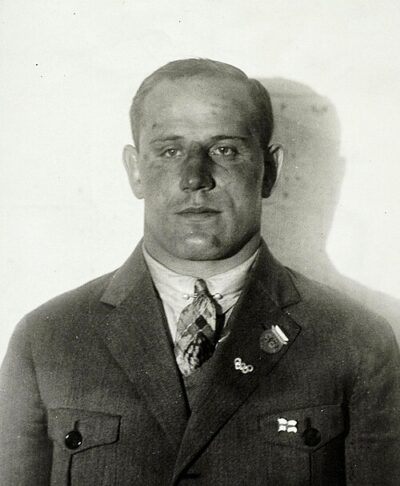
Väinö Kokkinen
Väinö Kokkinen was a Finnish wrestler. Born November 25, 1899, in Hollola. Died August 27, 1967, in Kuusankoski.
Facts
9 facts · 2 confirmed by two sources · 2 cited · 5 from one source
Where this comes from
Papalocal keeps its own record. It started from these sources; what each one said is kept here as it was copied, so a change on their side never changes this page by itself. Tap one to read its version.
What Wikidata says · copied November 18, 2026 · revision 2568536950
- Described as
- Finnish wrestler (1899–1967)
- Born
- November 25, 1899 · 1 reference
- Died
- August 27, 1967
- Born in
- Hollola
- Died in
- Kuusankoski · 1 reference
- Buried in
- Hietaniemi cemetery · 1 reference
- Citizen of
- Finland
- Occupation
- amateur wrestler
- Sport
- amateur wrestling
- Height
- 1.72 m (5 ft 8 in) · 1 reference
- Wikipedias with a page
- 22
Wikidata item Q1970524 (wikidata.org/wiki/Q1970524), public domain (CC0). Copied November 18, 2026.
What Wikipedia says · copied November 18, 2026 · revision 1365362317
Väinö Kokkinen (25 November 1899 – 27 August 1967) was a Finnish Greco-Roman wrestler. He won two Olympic gold medals in the middleweight category, in 1928 and 1932, and finished in fourth place in 1936. Between 1925 and 1933 he won one gold and four silver medals at the European championships as well as six national titles (1926, 1929–32 and 1934).
Kokkinen was a blacksmith by profession and fought in the Finnish Civil War. He started training in wrestling in 1921, after moving to Helsinki. He retired in 1936 and ran a successful business in the clothing and hospitality industry. In the 1940s he was also a board member of the sports club Helsingin Jyry.
- Born, in its opening lines
- November 25, 1899
- Died, in its opening lines
- August 27, 1967
From the Wikipedia article “Väinö Kokkinen” (en.wikipedia.org/wiki/Väinö_Kokkinen), by its contributors, under CC BY-SA 4.0 (creativecommons.org/licenses/by-sa/4.0/). Copied November 18, 2026; not changed.
Confirmed Two sources agree. Cited One source, and it names where it got it. One source One source, without a reference of its own. Sources disagree The sources disagree. We show the best-supported value and keep theirs below.
