
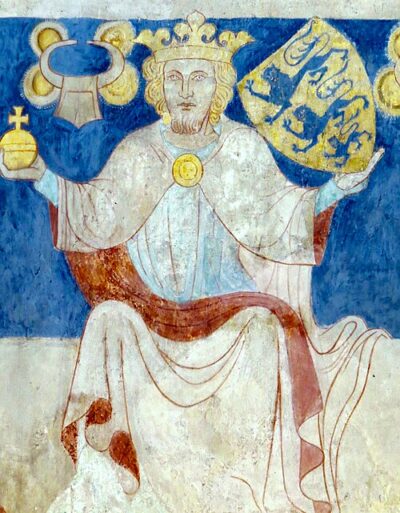
Valdemar II of Denmark
Valdemar II of Denmark was a King of Denmark from 1202 to 1241. Born 1170, in Ribe. Died March 28, 1241, in Vordingborg. Positions held include Monarch of Denmark (1202–1241) and Duke of Schleswig (1183–1216).
Facts
29 facts · 2 confirmed by two sources · 3 cited · 24 from one source
Where this comes from
Papalocal keeps its own record. It started from these sources; what each one said is kept here as it was copied, so a change on their side never changes this page by itself. Tap one to read its version.
What Wikidata says · copied November 16, 2026 · revision 2570150920
- Described as
- King of Denmark from 1202 to 1241
- Other names
- Valdemar II, Valdemar II Sejr el Victorioso
- Born
- 1170 · 5 references
- Died
- March 28, 1241 · 5 references
- Born in
- Ribe
- Died in
- Vordingborg · 1 reference
- Buried in
- St. Bendt's Church
- Citizen of
- Kingdom of Denmark
- Occupation
- monarch
- Positions held
- Monarch of Denmark (1202–1241); Duke of Schleswig (1183–1216)
- Spouse
- Dagmar of Bohemia (1205–1212) · 1 reference; Berengaria of Portugal (1214–1221) · 1 reference; Ingibiorg von Sachsen (1202–) · 1 reference; Helena Guttormsdatter · 1 reference; wife of Valdemar II of Denmark · 1 reference
- Children
- Valdemar the Young; Eric IV of Denmark; Abel of Denmark; Christopher I of Denmark; Sophia of Denmark; Canute, Duke of Estonia · 1 reference; Niels, Count of Halland · 1 reference
- Father
- Valdemar I of Denmark · 1 reference
- Mother
- Sofia of Minsk · 1 reference
- Siblings
- Canute VI of Denmark; Ingeborg of Denmark, Queen of France; Richeza of Denmark; Helena of Denmark; Sophie of Denmark · 1 reference
- Religion
- Christianity
- Wikipedias with a page
- 44
Wikidata item Q157799 (wikidata.org/wiki/Q157799), public domain (CC0). Copied November 16, 2026.
What Wikipedia says · copied November 16, 2026 · revision 1370731957
Valdemar II Valdemarsen (28 June 1170 – 28 March 1241), later remembered as Valdemar the Victorious (Danish: Valdemar Sejr) and Valdemar the Conqueror, was King of Denmark from 1202 until his death in 1241.
In 1207, Valdemar invaded and conquered Lybeck and Holstein, expanding the Danish territories. His involvement in the Norwegian succession led to the second Bagler War, temporarily settling the issue and making the Norwegian king owe allegiance to Denmark. He faced disputes with the papacy over the appointment of the Prince-Archbishop of Bremen and the Bishop of Schleswig. Valdemar's military campaigns included conflicts in northern Germany and the establishment of Danish rule in Estonia in 1219. His reign saw the adoption of a feudal system in Denmark and the creation of the Code of Jutland, which served as Denmark's legal code until 1683.
- Born, in its opening lines
- June 28, 1170
- Died, in its opening lines
- March 28, 1241
From the Wikipedia article “Valdemar II of Denmark” (en.wikipedia.org/wiki/Valdemar_II_of_Denmark), by its contributors, under CC BY-SA 4.0 (creativecommons.org/licenses/by-sa/4.0/). Copied November 16, 2026; not changed.
Confirmed Two sources agree. Cited One source, and it names where it got it. One source One source, without a reference of its own. Sources disagree The sources disagree. We show the best-supported value and keep theirs below.
