
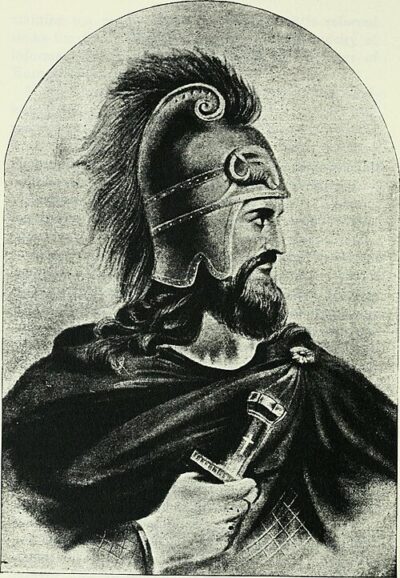
Vardan Mamikonian
Vardan Mamikonian was an Armenian military leader and saint. Born 388, in Artaxata. Died June 3, 451.
Facts
12 facts · 1 confirmed by two sources · 5 cited · 5 from one source · 1 where the sources disagree
What’s different
- Born: we show 388 (Sources disagree). Wikipedia says 387
Where this comes from
Papalocal keeps its own record. It started from these sources; what each one said is kept here as it was copied, so a change on their side never changes this page by itself. Tap one to read its version.
What Wikidata says · copied November 17, 2026 · revision 2570016791
- Described as
- Armenian military leader and saint
- Born
- 388
- Died
- June 3, 451 · 2 references
- Born in
- Artaxata
- Occupation
- military personnel
- Spouse
- Doustr · 1 reference
- Children
- Shushanik · 2 references; Vardanoysch Mamikonian · 2 references
- Father
- Hamazasp I Mamikonian · 2 references
- Mother
- Sahakanoysh · 2 references
- Siblings
- Hmayeak Mamikonian; Hamazaspian Mamikonian
- Military rank
- Sparapet
- Wikipedias with a page
- 27
Wikidata item Q1280744 (wikidata.org/wiki/Q1280744), public domain (CC0). Copied November 17, 2026.
What Wikipedia says · copied November 17, 2026 · revision 1386167896
Vardan Mamikonian (Armenian: Վարդան Մամիկոնեան; variants: Vartan, Wartan; c. 387 – 451) was an Armenian military leader who led a rebellion against Sasanian Iran in 450–451. He was the head of the Mamikonian noble family and holder of the hereditary title of sparapet, the supreme commander of the Armenian armed forces. Vardan and most of his comrades died at the Battle of Avarayr in 451, but their sacrifice was immortalized in the works of the Armenian historians Elishe and Ghazar Parpetsi. He is regarded as a national hero among Armenians and venerated as a martyr and a saint of the Armenian Apostolic Church and the Armenian Catholic Church. Vardan and the rebellion he led are commemorated in numerous works of art and literature. According to Arshag Chobanian, "To the Armenian nation, Vartan [...] is the most beloved figure, the most sacred in their history, the symbolical hero who typifies the national spirit."
- Born, in its opening lines
- 387
- Died, in its opening lines
- 451
From the Wikipedia article “Vardan Mamikonian” (en.wikipedia.org/wiki/Vardan_Mamikonian), by its contributors, under CC BY-SA 4.0 (creativecommons.org/licenses/by-sa/4.0/). Copied November 17, 2026; not changed.
Confirmed Two sources agree. Cited One source, and it names where it got it. One source One source, without a reference of its own. Sources disagree The sources disagree. We show the best-supported value and keep theirs below.
