
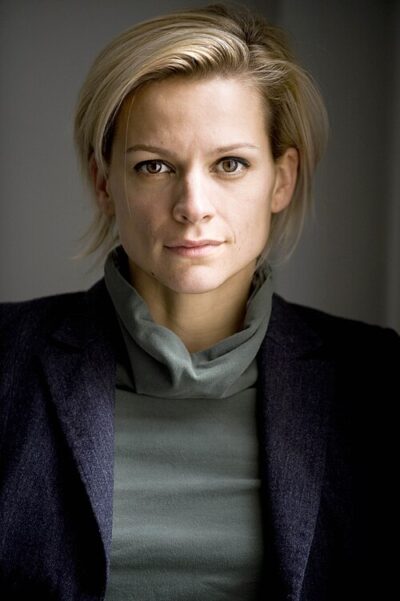
Veerle Baetens is a Belgian actress. Born January 24, 1978, in Brasschaat. Educated at Royal Institute for Theatre, Cinema and Sound. Awards include European Film Award for Best Actress.
Facts
13 facts · 1 confirmed by two sources · 3 cited · 9 from one source
Where this comes from
Papalocal keeps its own record. It started from these sources; what each one said is kept here as it was copied, so a change on their side never changes this page by itself. Tap one to read its version.
What Wikidata says · copied November 18, 2026 · revision 2567728119
- Described as
- Belgian actress
- Born
- January 24, 1978 · 1 reference
- Born in
- Brasschaat · 1 reference
- Citizen of
- Belgium
- Occupation
- actor · 3 references; singer; stage actor; film actor; film director · 1 reference
- Education
- Royal Institute for Theatre, Cinema and Sound
- Instrument
- voice
- Awards
- European Film Award for Best Actress (2013) · 1 reference
- Field
- performing arts
- Website
- http://www.veerlebaetens.com/
- Wikipedias with a page
- 23
Wikidata item Q514769 (wikidata.org/wiki/Q514769), public domain (CC0). Copied November 18, 2026.
What Wikipedia says · copied November 18, 2026 · revision 1320884986
Veerle Baetens (born 24 January 1978) is a Belgian actress, filmmaker, and singer best known for her lead role as Elise / Alabama in the romantic drama film The Broken Circle Breakdown (2012), for which she won the Tribeca Film Festival Award for Best Actress. She is also known for her lead role as Detective Hannah Maes on the VTM crime drama series Code 37 (2009–12).
She made her feature directorial debut with the drama film When It Melts (2023), for which she was nominated for the Grand Jury Prize at the 2023 Sundance Film Festival.
- Born, in its opening lines
- January 24, 1978
From the Wikipedia article “Veerle Baetens” (en.wikipedia.org/wiki/Veerle_Baetens), by its contributors, under CC BY-SA 4.0 (creativecommons.org/licenses/by-sa/4.0/). Copied November 18, 2026; not changed.
Confirmed Two sources agree. Cited One source, and it names where it got it. One source One source, without a reference of its own. Sources disagree The sources disagree. We show the best-supported value and keep theirs below.
