
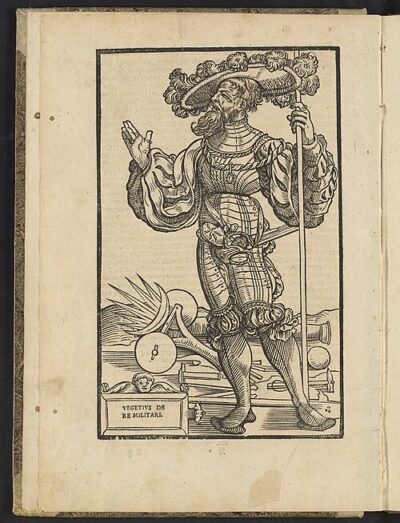
Vegetius
Vegetius was a writer of the Later Roman Empire. Born 4th century. Died 450. Known for De re militari and Digesta artis mulomedicinae.
Facts
15 facts · 0 confirmed by two sources · 7 cited · 8 from one source
Where this comes from
Papalocal keeps its own record. It started from these sources; what each one said is kept here as it was copied, so a change on their side never changes this page by itself. Tap one to read its version.
What Wikidata says · copied November 16, 2026 · revision 2568846599
- Described as
- writer of the Later Roman Empire
- Other names
- Flavius Vegetius Renatus, Vegetius Renatus, Flavius Vegetius, Publius Vegetius Renatus, Publius Flavius Vegetius Renatus
- Born
- 4th century
- Died
- 450 · 4 references
- Citizen of
- Ancient Rome
- Occupation
- writer · 1 reference; military personnel · 1 reference; historian · 1 reference; physician · 1 reference; official · 1 reference
- Known for
- De re militari; Digesta artis mulomedicinae
- Field
- scientific literature · 1 reference; military affairs · 1 reference; veterinary medicine · 1 reference; ancient Latin literature · 1 reference
- Religion
- Christianity
- Wikipedias with a page
- 57
Wikidata item Q4298 (wikidata.org/wiki/Q4298), public domain (CC0). Copied November 16, 2026.
What Wikipedia says · copied November 16, 2026 · revision 1385557483
Publius (or Flavius) Vegetius Renatus, known as Vegetius (Latin: [u̯ɛˈɡɛtiʊs]), was a writer of the Later Roman Empire (late 4th century). Nothing is known of his life or station beyond what is contained in his two surviving works: Epitoma rei militaris (also referred to as De re militari), and the lesser-known Digesta Artis Mulomedicinae, a guide to veterinary medicine. He identifies himself in the opening of his work Epitoma rei militaris as a Christian.
From the Wikipedia article “Vegetius” (en.wikipedia.org/wiki/Vegetius), by its contributors, under CC BY-SA 4.0 (creativecommons.org/licenses/by-sa/4.0/). Copied November 16, 2026; not changed.
Confirmed Two sources agree. Cited One source, and it names where it got it. One source One source, without a reference of its own. Sources disagree The sources disagree. We show the best-supported value and keep theirs below.
