
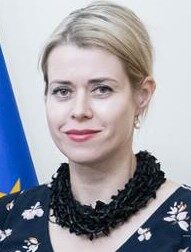
Veranika Capkała is a Belarusian public activist. Born September 7, 1976, in Mahilyow. Educated at Faculty of International Relations of the Belarusian State University and Belarusian State Economic University. Awards include Sakharov Prize and Charlemagne Prize.
Facts
16 facts · 1 confirmed by two sources · 8 cited · 7 from one source
Where this comes from
Papalocal keeps its own record. It started from these sources; what each one said is kept here as it was copied, so a change on their side never changes this page by itself. Tap one to read its version.
What Wikidata says · copied November 18, 2026 · revision 2569753634
- Described as
- Belarusian public activist
- Other names
- Veranika Valeriewna Capkała
- Born
- September 7, 1976
- Born in
- Mahilyow · 1 reference
- Citizen of
- Belarus
- Occupation
- politician · 1 reference; manager; civil rights advocate · 1 reference; political scientist · 1 reference; economist · 1 reference
- Worked for
- Microsoft · 1 reference
- Education
- Faculty of International Relations of the Belarusian State University (–1998); Belarusian State Economic University (2004–2006) · 1 reference; Belarusian State University (1993–1998) · 1 reference
- Member of
- National Council of United Democratic Forces
- Awards
- Sakharov Prize · 1 reference; Charlemagne Prize (2022) · 1 reference
- Spouse
- Valer Capkała · 1 reference
- Wikipedias with a page
- 20
Wikidata item Q98119626 (wikidata.org/wiki/Q98119626), public domain (CC0). Copied November 18, 2026.
What Wikipedia says · copied November 18, 2026 · revision 1373335367
Veronika Valeryevna Tsepkalo or Veranika Valereuna Tsepkala (Russian: Вероника Валерьевна Цепкало; Belarusian: Вераніка Валер’еўна Цэпкала; born 7 September 1976) is a Belarusian political activist.
- Born, in its opening lines
- September 7, 1976
From the Wikipedia article “Veronika Tsepkalo” (en.wikipedia.org/wiki/Veronika_Tsepkalo), by its contributors, under CC BY-SA 4.0 (creativecommons.org/licenses/by-sa/4.0/). Copied November 18, 2026; not changed.
Confirmed Two sources agree. Cited One source, and it names where it got it. One source One source, without a reference of its own. Sources disagree The sources disagree. We show the best-supported value and keep theirs below.
