
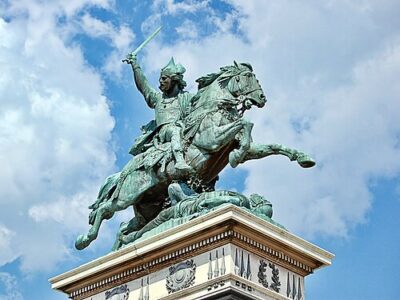
Vercingetorix
Vercingetorix was a protohistoric chieftain of the Arverni tribe, defeated by Julius Caesar during the Gallic wars. Born 80 BC, in Gergovie. Died 46 BC, in Rome.
Facts
8 facts · 0 confirmed by two sources · 2 cited · 5 from one source · 1 where the sources disagree
What’s different
- Born in: we show Gergovie (Sources disagree). Wikidata also lists Augustonemetum
Where this comes from
Papalocal keeps its own record. It started from these sources; what each one said is kept here as it was copied, so a change on their side never changes this page by itself. Tap one to read its version.
What Wikidata says · copied November 16, 2026 · revision 2568006474
- Described as
- protohistoric chieftain of the Arverni tribe, defeated by Julius Caesar during the Gallic wars
- Born
- 80 BC
- Died
- 46 BC · 3 references
- Born in
- Gergovie; Augustonemetum
- Died in
- Rome · 2 references
- Cause of death
- garrote
- Occupation
- traditional leader or chief; military personnel · 1 reference
- Father
- Celtillus
- Wikipedias with a page
- 68
Wikidata item Q178953 (wikidata.org/wiki/Q178953), public domain (CC0). Copied November 16, 2026.
What Wikipedia says · copied November 16, 2026 · revision 1383983621
Vercingetorix (Latin: [wɛrkɪŋˈɡɛtɔriːks]; Gaulish: Uercingetorixs; Ancient Greek: Οὐερκιγγετόριξ [u.erkiŋɡeˈtoriks]; c. 82 – 46 BC) was a Gallic nobleman and chieftain of the Arverni who united the Gauls in a failed revolt against Rome during the Gallic Wars (58–50 BC).
Vercingetorix was born c. 82 BC in Gergovia to Celtillus, an Arvenian aristocrat who was murdered around 70–60 BC by members of his own people for attempting to establish kingship among the Arverni. In early 52 BC, Vercingetorix was exiled by pro-Roman factions for seeking to incite a revolt against Rome, but he returned with supporters, expelled his opponents, and was proclaimed king before calling for a broader Gallic revolt against Caesar's conquest of Gaul.
Vercingetorix was elected to command a major coalition of tribes from most of Gaul to fight the invading army. He organised a coordinated resistance aimed at exhausting the Roman forces through scorched-earth tactics and harassment campaigns. After early successes, including a Roman defeat at Gergovia that nearly brought Caesar to overall defeat and withdrawal from Gaul, he was eventually forced to surrender at the Battle of Alesia (September 52 BC). Taken prisoner, Vercingetorix was imprisoned in Rome for six years before being executed after Caesar's triumph in 46 BC.
Although largely overlooked during the Middle Ages, Vercingetorix was rediscovered in the 16th century through renewed interest in Caesar's writings. From the 19th century onward, he became a prominent symbol of French national identity and, more broadly, of resistance to foreign domination. Since then, he has remained a recurring figure in arts and popular culture, where he is variously portrayed as a heroic defender of freedom and independence, or as a tragic loser who retains moral superiority over the victor.
From the Wikipedia article “Vercingetorix” (en.wikipedia.org/wiki/Vercingetorix), by its contributors, under CC BY-SA 4.0 (creativecommons.org/licenses/by-sa/4.0/). Copied November 16, 2026; not changed.
Confirmed Two sources agree. Cited One source, and it names where it got it. One source One source, without a reference of its own. Sources disagree The sources disagree. We show the best-supported value and keep theirs below.
